Planned website maintenance: June 26-28, 2026. Intermittent downtime possible.
Latest EHE News, Events & Research
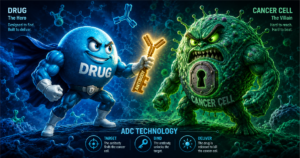
Why this matters for people with EHE For people living with EHE, finding an effective treatment and understanding who best benefits from treatments is one of the greatest challenges of this disease. Traditional chemotherapy is often ineffective for EHE, and the search for more effective treatment options is central to our mission at the EHE […]
The EHE Foundation hosted the sixth annual virtual convening of the EHE 360 Global Conference on April 31 – May 1, 2026. The conference brought together patients, caregivers, clinicians, researchers, regulators, and industry partners from around the world to promote education, broaden research collaborations, and advance therapeutic development for epithelioid hemangioendothelioma (EHE), an ultra-rare sarcoma. […]
When the Road Forks Twice: Shirley’s Story Some people face a rare cancer diagnosis after years of searching for answers. For Shirley Leonard, the discovery of EHE arrived differently — quietly, almost hidden in the shadow of a battle already being fought. About eight years ago, Shirley was diagnosed with Multiple Myeloma. What followed was […]

What an amazing ASCO 2026 for so many people affected by cancer. The ASCO Annual Meeting in Chicago brought tens of thousands of global oncology professionals together with the same goal – to change lives. EHE Foundation Executive Director Denise Robinson was there to represent the EHE community, raise awareness of patients’ needs, and connect […]

Painting Angels: Christine Jaksy’s Art as Response and Resilience Christine Jaksy’s life has been marked by extraordinary resilience. A former athlete, she has endured a series of disabling and life-threatening conditions—lupus, paralysis of her right arm, and partial paralysis of her other limbs. Then, in December 2023, she received another diagnosis: epithelioid hemangioendothelioma (EHE), a […]

One in a Million: Robbie Garrovillas’ Journey of Diagnosis, Treatment, and Faith When Robbie Garrovillas received his EHE diagnosis in 2025 and endured nine grueling cycles of chemotherapy, he faced not just a medical crisis, but an existential one. How do you make sense of a rare cancer that refuses to fit into neat categories? […]

For a cancer as rare as EHE, connection is something we intentionally create. On Saturday, April 11, 2026, EHE Foundation and Dana-Farber Cancer Institute hosted an inaugural EHE Education Day, bringing together patients, loved ones, clinicians, researchers, and advocates for a day of learning, discussion, and in-person connection. With more than 25 people in attendance, […]

Lila’s Story: Finding Strength in the Unexpected Lila’s EHE story began in a way no one could have planned. Her aunt, an ultrasound technician, was casually scanning her one day when she noticed something unusual on Lila’s liver. What seemed like an offhand moment quickly became something much more serious. “She instantly found 1-2 spots […]

Farzaad’s Story: Facing EHE with Faith, Strength, and Positivity For Farzaad, the first signs that something was wrong were easy to notice, but impossible to explain. Around May 2025, he began experiencing swelling in his face that did not feel normal. He also found himself becoming short of breath more easily. Over time, other changes […]
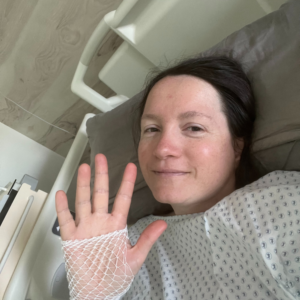
Anke’s Story: Building Knowledge and Choosing to Just Live For Anke, the road to an EHE diagnosis began with something deceptively ordinary: a stomach ache. Her doctor, being extra cautious, ordered an ultrasound. The scan showed shadows on her liver, and what followed were eight long weeks of uncertainty, testing, and waiting. When the pathology […]