Newly Diagnosed
Request a Newly Diagnosed ToolkitYou, or someone you care for, has been diagnosed with epithelioid hemangioendothelioma (EHE), an ultra-rare cancer that many doctors have never encountered. Fewer than one in a million people are living with EHE. That is a lot to take in.
You are not alone. The EHE Foundation is the leading global advocacy, education, and research organization dedicated entirely to EHE. Every day, we work with researchers studying EHE, specialists treating it, and people living with it.
Start here. We will walk you through your first three steps, then move on to educational resources, care planning tools, and where to find support.
STEP 1: Confirm Your EHE Diagnosis
An accurate diagnosis affects everything that follows.
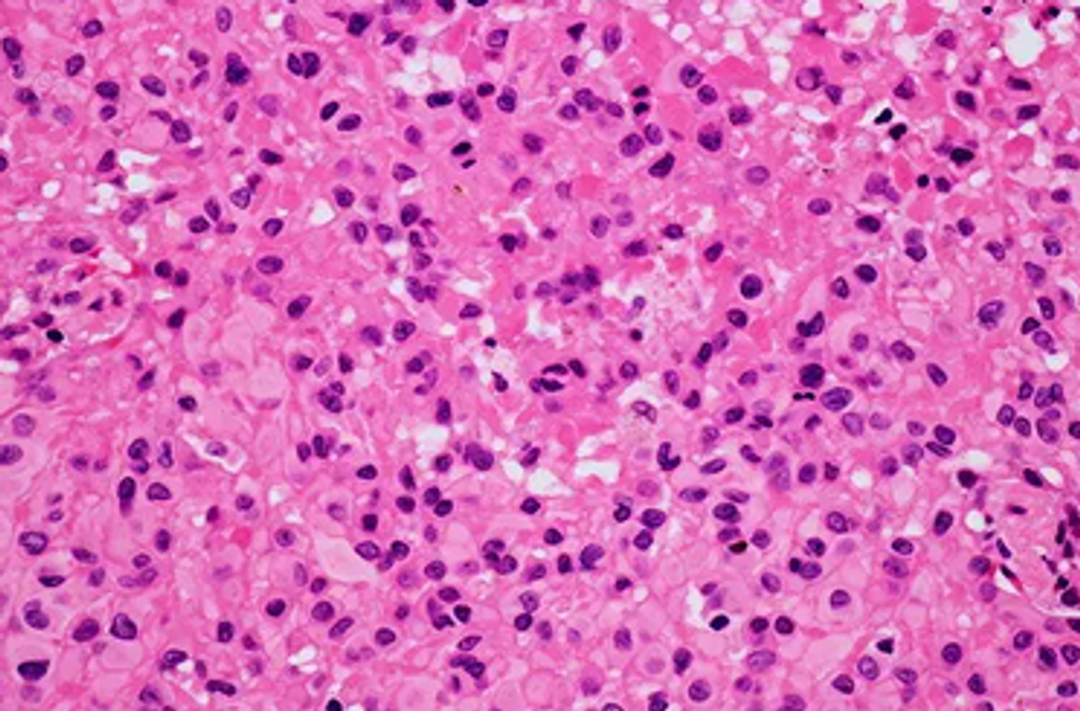
It is important to confirm your diagnosis of EHE and to rule out other cancers that mimic EHE. Misdiagnosis of sarcomas is common. Ask to have your pathology reviewed by a pathologist with sarcoma expertise who works within a multidisciplinary sarcoma team. Expert review is strongly recommended any time the original diagnosis was made outside a sarcoma center.
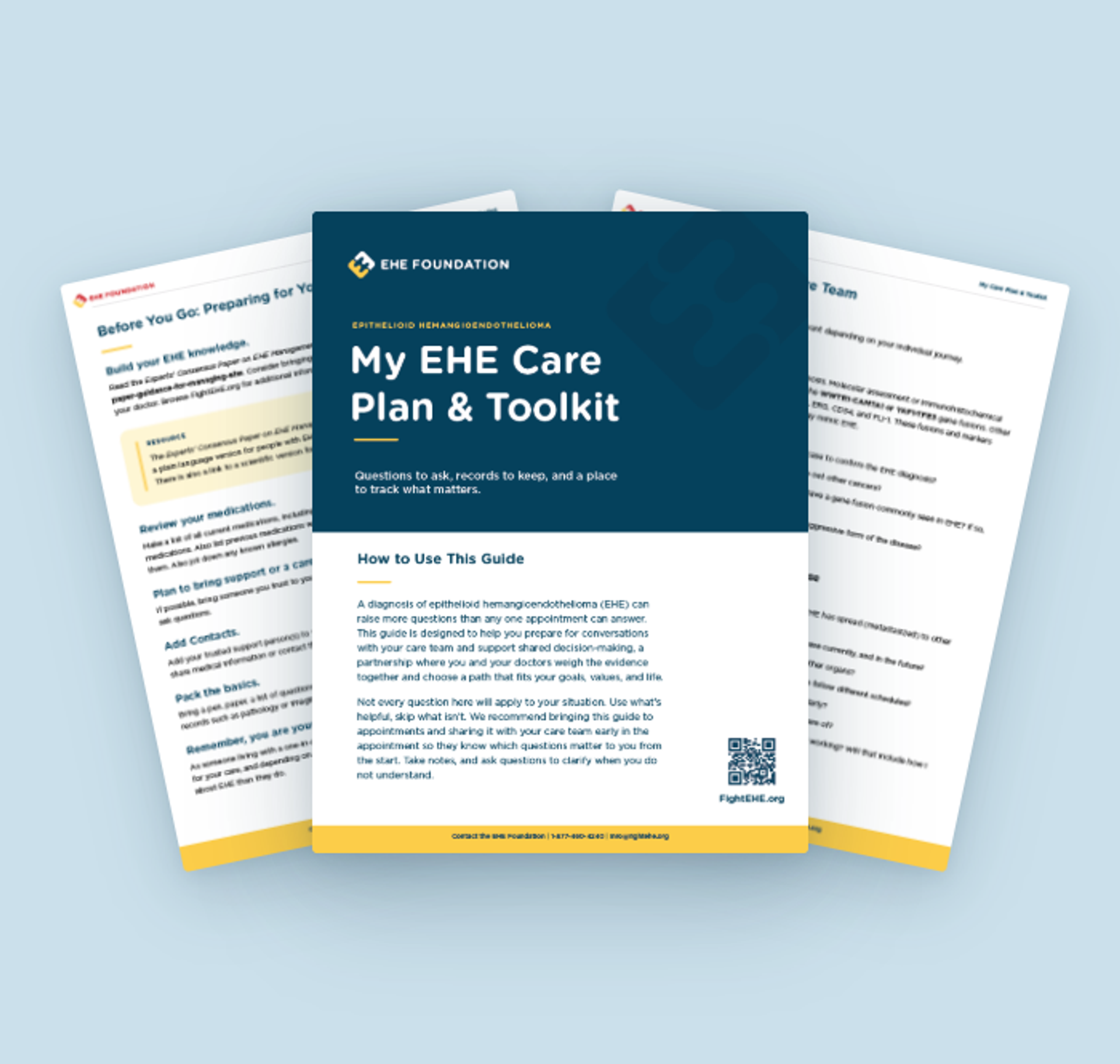
A helpful downloadable resource during these early days is the EHE Care Plan & Toolkit, which includes questions to ask your doctors and tools to track appointments, symptoms, and diagnostics.
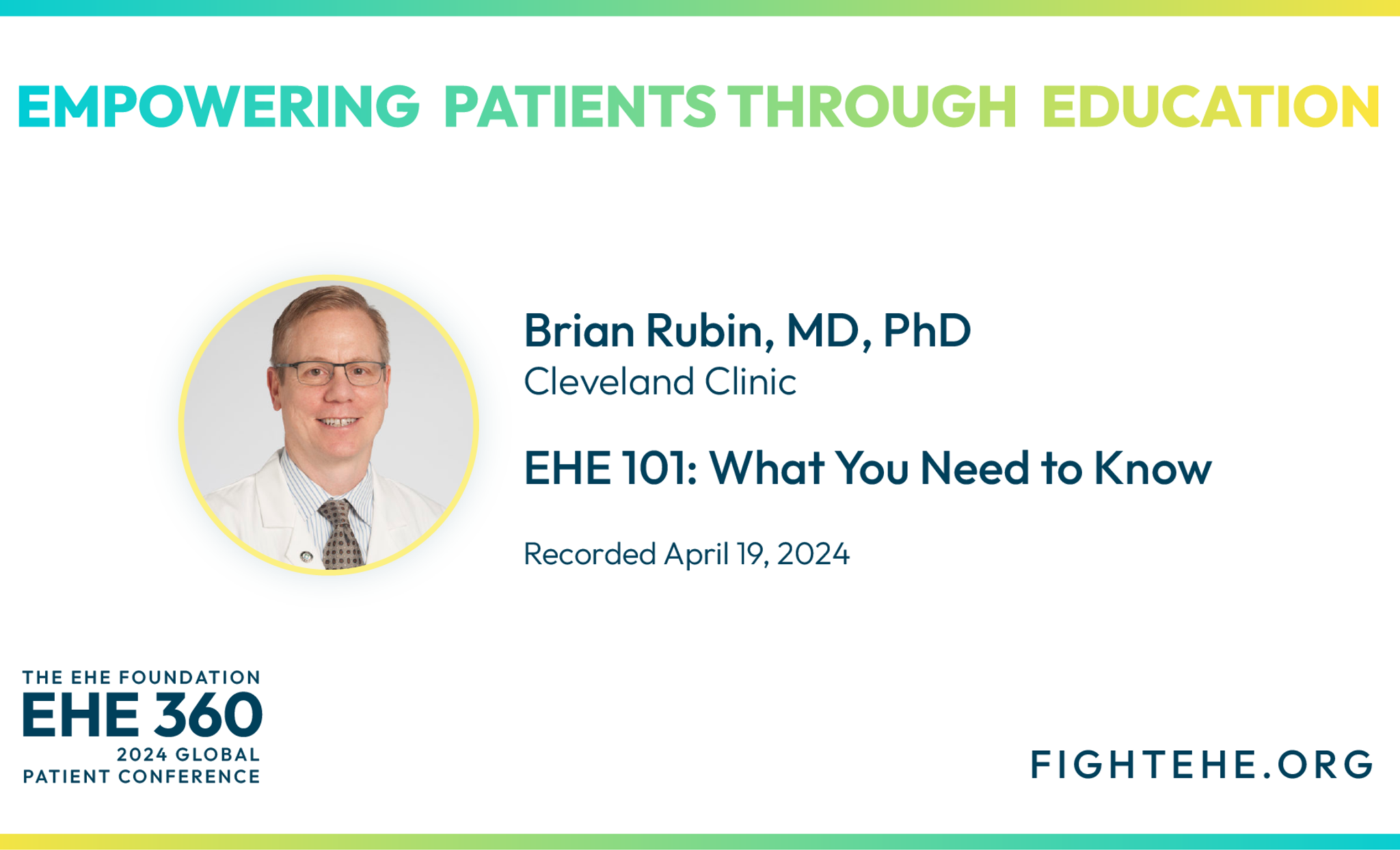
What You Need to Know
Dr. Brian Rubin, expert pathologist at Cleveland Clinic, explains what EHE is, how it is diagnosed, and how it presents or where it might occur in the body.
STEP 2: Find Expert Care
People with EHE should be treated by a multidisciplinary sarcoma team: a group of specialists who work together and who are familiar with EHE. These teams are based at large academic medical centers and sarcoma reference centers.
Our Provider Directory lists clinicians and institutions experienced with sarcoma and EHE. If you are not sure where to start, contact us, and we will help you find options.
If getting to a sarcoma center is not possible, ask your local oncologist to consult with a sarcoma specialist.
STEP 3: Understand How EHE May Be Monitored and Treated
The right first move is not the same for everyone with EHE, and treatment options vary depending on the presentation and extent of disease. This may differ significantly from treatment plans for more common cancers.
Your care team will weigh where your disease is located, whether you have symptoms, and how it is changing over time. For some people, this means treatment is not suggested right away, and active surveillance, sometimes called “watch and wait,” is recommended. This is a strategy of regular imaging and close monitoring by expert sarcoma specialists.
Prepare for Appointments
Between test results, treatment options, and too many unanswered questions, it is easy to leave an appointment having forgotten the thing you most wanted to ask. Our EHE Care Plan & Toolkit provides a simple way to organize questions and notes before every visit. You will also find trackers for symptoms, appointments, and diagnostics. Bring this document to every appointment to be sure your questions and concerns are addressed.
Build Your Knowledge
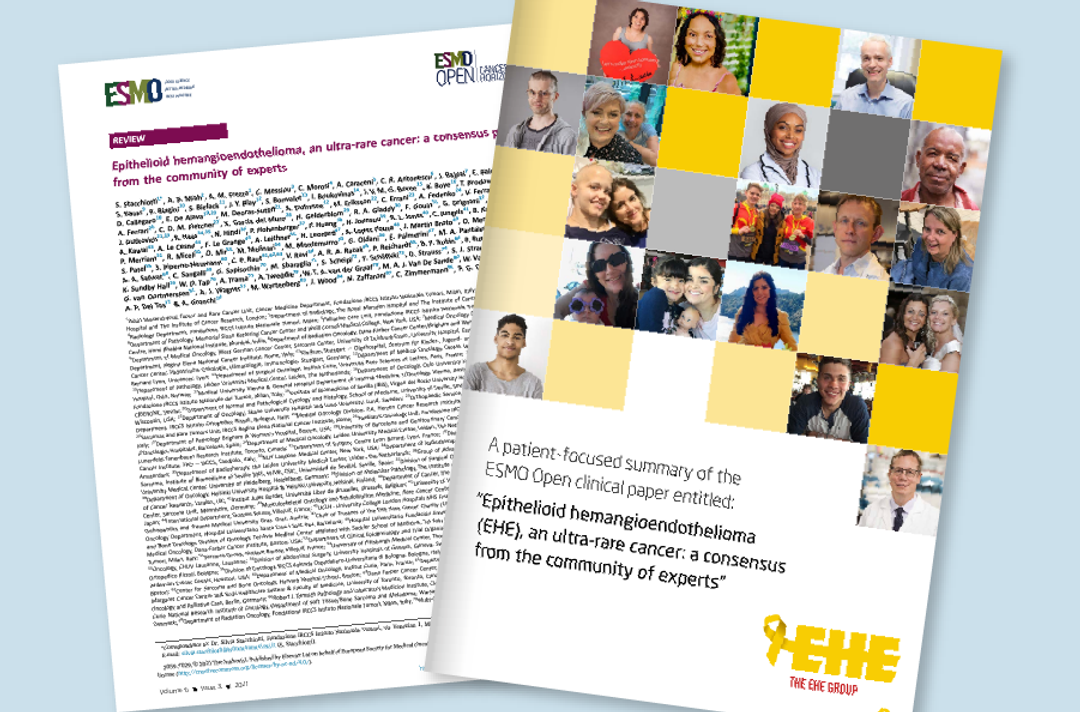
EHE varies from one person to the next, and no one can yet predict the course it will take in any individual. You and your care team should make care decisions together based on your unique situation. This is called shared decision-making. Learning as much as you can about EHE is one of the most impactful things you can do to advocate for yourself.
Connect and Find Support
Getting a cancer diagnosis can feel destabilizing. Many people with EHE and the people who care for them have found comfort in meeting others who are affected by this disease.
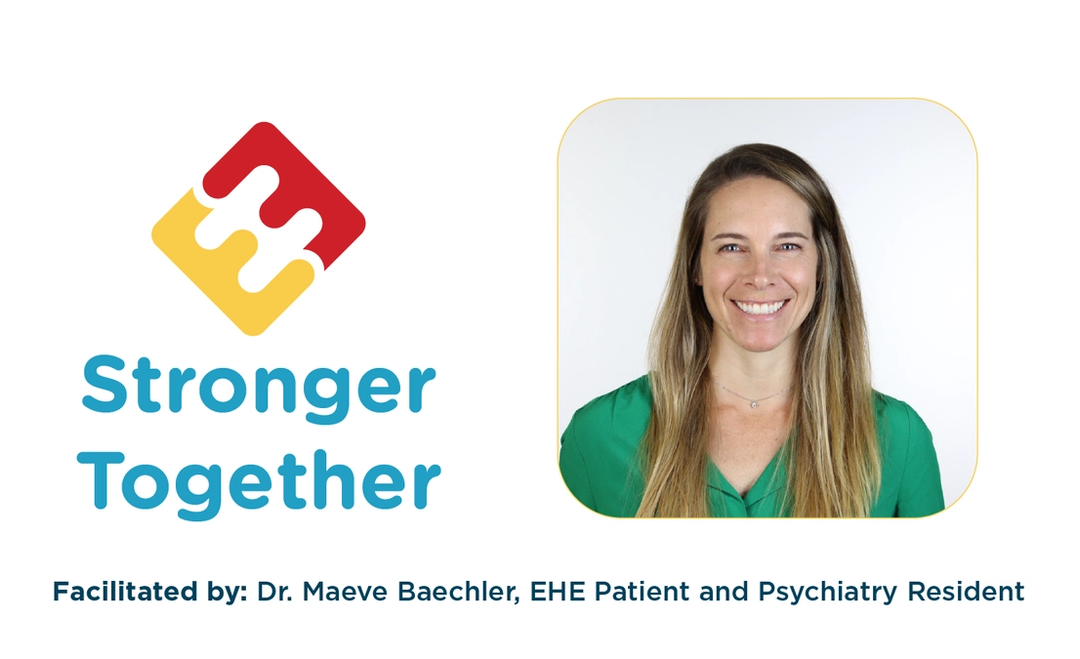
EHE Foundation-hosted Virtual Support Group
Our virtual support group meets monthly and is open to any adult affected by EHE, including caregivers, partners, and family members. It is a place to ask the questions you are not ready to ask anyone else, and to hear from people who understand what you are experiencing. Come to listen, or come to talk. Register for the next meeting.
Stay Informed
Subscribe to our newsletter for updates on EHE clinical care and research, opportunities to connect, and ways to take action.
Contact Us
Our team is a resource for you at any stage. Contact us anytime with your questions.
Get Connected
Find and connect with the EHE Foundation on social media: @EHEFoundation.











Navigating EHE
Find a specialist, prepare for appointments, build a care team, and plan for what’s next. Get oriented to the practical side of living with EHE.