EHE 360 2026 GLOBAL CONFERENCE
April 30 - May 1, 2026
Advancing research. Building knowledge. Strengthening community.
For people living with epithelioid hemangioendothelioma (EHE), the EHE Foundation is the connective tissue between an ultra-rare diagnosis and the science, clinical expertise, and community working to address it. EHE affects roughly one person in every million, and the EHE Foundation is dedicated to advancing research, building knowledge, and strengthening community for everyone affected by this disease.
EHE 360 is where connection, education, and progress happen.
2026 EHE 360 Global Conference Report
Now in its sixth year as a project of the EHE Foundation, EHE 360 is the world's only patient-led global forum dedicated exclusively to EHE. Each year, the event brings together the full spectrum of the EHE community: people living with the disease, their families and caregivers, researchers working to understand it, clinicians working to treat it, and industry working to develop new therapies, for two days of substantive scientific and clinical education.
Held on April 30th and May 1st, the 2026 EHE 360 Global Conference brought together researchers and clinicians from four continents for 17 presentations across six sessions. The EHE Scientific Symposium highlighted advances in translational research, fusion protein biology, and emerging therapeutic development. The EHE Clinical Care Summit explored diagnosis, disease management, ongoing clinical trials, and integrative care, all anchored by the direct and meaningful interactions between scientists and the community that define EHE 360.
Immediately following the conference, the EHE Foundation hosted the EHE Social Hour, an unstructured gathering where attendees connected informally to share perspectives and learnings, strengthening our community and shared mission.
A Global Community
"Connecting across borders brings knowledge together, moves research forward, and maybe most importantly, it connects the people who are living with EHE."
- Oliver Bohl, Rare Cancer EHE Deutschland e.V.
EHE does not recognize borders, and neither does the community working to address it. The 2026 conference drew registrations from 19 countries spanning five continents, united by a single commitment: ensuring that no one with EHE faces their diagnosis alone.
The conference opened with an international welcome from EHE organizations in Australia, Canada, the UK, Italy, and Germany, each representing a community navigating this disease within its own healthcare landscape. Their presence was a demonstration of what EHE 360 has grown into — a global forum where knowledge, experience, and hope move freely across borders.
"When a disease is rare, no one can move forward alone. Patients need doctors. Doctors need researchers. Researchers need data. And all of us need to keep patients at the center of every conversation."
- Andrei Ivanescu, President, EHE ITALIA Associazione Non Solo LAURA ODV
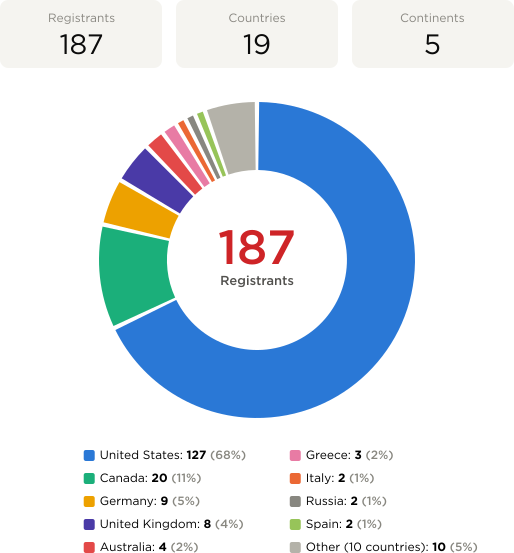
The 2026 EHE 360 Global Conference drew 187 registrants from 19 countries across five continents, reflecting the expanding global reach of the EHE community and the growing awareness of EHE 360 as the world's leading forum for EHE science and care.
Of 187 registrants, 134 attended at least one day of the 2026 EHE 360 Global Conference, representing a 71.7% registration-to-attendance conversion rate, and reflecting strong, active engagement with the programming. Those 134 attendees represented 15 countries across five continents.
Engagement ran deep with more than half of all attendees, 76 people, or 56.7%, participating in both the EHE Scientific Symposium and the EHE Clinical Care Summit.
EHE Scientific Symposium Attendance
EHE Clinical Care Summit Attendance

Building Momentum in EHE Research
Building Momentum in Research to Improve Outcomes in EHE
Dr. Tom Wei-Wu Chen | National Taiwan University Hospital
"We learn from patients, we learn from experience, and we learn from science. That is how we are building momentum."
Dr. Chen opened the EHE 360 with a keynote that established both the biological foundation of EHE and the trajectory of global research efforts working to address it.
EHE is defined by specific gene fusions: most commonly, a fusion of WWTR1 (also known as TAZ) and CAMTA1, present in approximately 90% of cases; and less commonly, a YAP1-TFE3 fusion accounting for roughly 10%. These fusions disrupt the normal regulation of the Hippo signaling pathway, effectively cutting the cellular brake that keeps growth in check. The result is an oncogene driving proliferation without regulation.
Dr. Chen organized his keynote around three sources of progress in EHE: learning from patients, learning from experience, and learning from science. He reviewed Stacchiotti et al.'s landmark data showing sirolimus achieved a 10.8% partial response rate and 65% clinical benefit rate in additional patients with progressive EHE. He then addressed the emerging global effort through the PUSH Platform to understand when and how mTOR inhibitors should be used across different patient populations, before turning to the science driving the next generation of treatments, including TEAD inhibitors now advancing through clinical trials and the growing international network of researchers and foundations working in concert to accelerate progress.
- EHE is defined by two gene fusions that are now well understood, making them actionable targets for drug development in ways that were not possible even a decade ago.
- Based on real-world data, sirolimus has become accepted as the leading treatment for EHE at many institutions.
- The PUSH Platform is building the international infrastructure needed to answer the next generation of questions about when and how to treat EHE, coordinating data across institutions in Europe, Australia, Taiwan, the United States, and Canada.
- TEAD inhibitors are no longer theoretical. Two are advancing through clinical trials right now, with early data showing meaningful benefit in people with EHE.
- The global EHE research network is larger and more coordinated than at any previous point, working from shared data and shared questions.
- EHE is increasingly recognized within the broader rare cancer community as a model for how patient advocacy, foundation funding, and international scientific collaboration can accelerate progress in an ultra-rare disease.

April 30, 2026 EHE Scientific Symposium
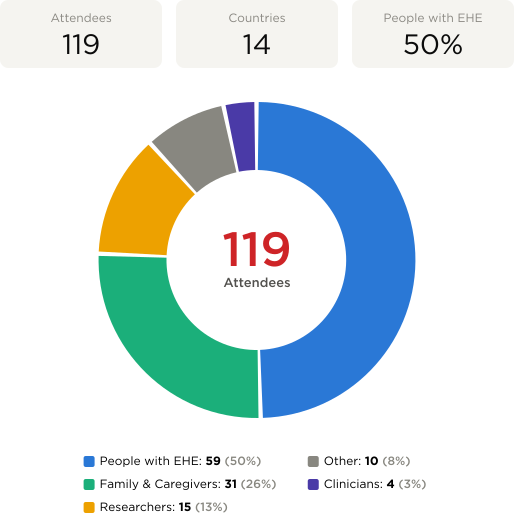
The EHE Scientific Symposium brought together 119 attendees for a full day of presentations focused on the science of identifying effective therapies for EHE and on understanding how research translates into treatments that reach people in the clinic. People living with EHE made up the largest share of the audience at 50%, joined by family members and caregivers (26%), researchers (13%), clinicians (3%), and others (8%). The attendance composition reflects that people affected by EHE are interested and engaged with scientific content.
Novel Approaches to Target EHE Fusions
Real Time Investigation of EHE Fusion Protein Behaviour
Professor Kieran Harvey | Peter MacCallum Cancer Centre, Australia
Immunopeptidome-guided Target Discovery for T-cell Based Immunotherapy
Jens Bauer, PhD | University Hospital Tubingen, Germany
Overview
EHE's defining gene fusions are also its most promising therapeutic targets. Session 1 brought two presentations focused on understanding these fusion proteins at the most fundamental level and on developing new strategies to make EHE cells visible and vulnerable to treatment.
Watching EHE Proteins in Real Time
Dr. Harvey has developed a way to track individual EHE fusion proteins moving inside living cells at single-molecule resolution, observing in real time how they find and bind DNA, and what happens when that process is disrupted. The key finding: the YAP-TFE3 fusion protein binds DNA approximately three times longer than its parent protein, YAP, forming more stable and more oncogenic complexes with TEAD transcription factors. When a single amino acid required for TEAD binding is disrupted, the fusion protein's grip on DNA collapses entirely, validating TEAD as a critical vulnerability in EHE and establishing a platform for observing how drugs affect fusion protein behavior in real time.
Making EHE Visible to the Immune System
Dr. Bauer uses immunopeptidomics–the direct measurement of protein fragments displayed on the surface of tumor cells–to identify targets for therapeutic vaccines. Rather than predicting which targets might be present, his team measures what is actually there. In fibrolamellar carcinoma, a different fusion-driven rare cancer, this approach produced a durable complete response in one patient who remains in full recovery more than five years later. A newly EHE Foundation-funded project is now applying this technology to EHE, with plans to analyze tumor samples from 10 to 20 people with EHE to identify the most actionable targets for future studies of an EHE-specific vaccine.
- Scientists are watching individual EHE fusion proteins moving and binding DNA in living cells in real time, providing a level of mechanistic understanding that directly informs drug development.
- TEAD is confirmed as a critical vulnerability in EHE. Disrupting a single amino acid in the fusion protein is enough to collapse its grip on DNA, validating the scientific rationale for TEAD inhibitors.
- Immunopeptidomics measures what EHE tumor cells are actually displaying on their surface rather than predicting it, giving researchers a more accurate map of targets for therapeutic vaccines.
- Expanding the single-molecule tracking studies to TAZ-CAMTA1, the more common EHE fusion, and using the platform to observe in real time how TEAD inhibitor drugs affect fusion protein behavior.
- Understanding whether the fusion-targeted vaccine approach that produced a five-year complete remission in fibrolamellar carcinoma can be replicated in EHE.
- The single-molecule tracking platform can now be used to observe how TEAD inhibitor drugs affect fusion protein behavior in real time, potentially accelerating the path to more effective, better-tolerated treatments.
- The EHE immunopeptidomics project builds directly on the prior success of a fusion-driven peptide vaccine in fibrolamellar carcinoma.
- Dr. Bauer's lab has an established GMP vaccine production pipeline and clinical trial infrastructure, meaning that if actionable EHE-specific targets are identified, translation into a clinical study could move quickly.
Exploring Druggable Pathways to Treat EHE
Uncovering New Therapies and Clinical Biomarkers in Epithelioid Hemangioendothelioma
John Lamar, PhD | Albany Medical College
Combination Therapy Approaches Targeting Genomic and Signal Transduction Vulnerabilities in EHE
Gillian DeWane, PhD | University of Iowa
Targeting the Oncogenic Transcriptional Complex in EHE
Ajaybabu Pobbati, PhD | Cleveland Clinic
Overview
Finding effective treatments for EHE requires attacking its biology from multiple angles simultaneously. Session 2 presented three distinct approaches: repurposing existing medications with established safety profiles, combining multiple agents to achieve what none can do alone, and targeting the oncogenic complex driving EHE from two different directions at once.
A Surprising Lead: Statins
Dr. Lamar's lab screened 190 FDA-approved drugs against EHE cells and identified statins, widely used cholesterol-lowering medications, as selectively toxic to EHE cells while largely sparing normal cells. Four of the five most EHE-selective compounds in the screen were statins. Mechanistically, statins block the mevalonate pathway, reducing TAZ-CAMTA1 levels in the nucleus and directly weakening EHE's primary oncogenic driver. In mouse models, statins significantly slowed tumor growth and extended survival. Critically, statins also showed synergy with TEAD inhibitors in EHE cells, achieving greater cell killing at lower doses than either drug alone; a potentially important finding given that TEAD inhibitors have shown dose-limiting toxicity in clinical trials. A second EHE Foundation-funded project in Dr. Lamar's lab is developing blood-based biomarkers to monitor disease progression and treatment response in real time.
Note: People with EHE should consult with their physicians about adding, changing, or combining medications. Some medications cannot be safely combined.
Stabilizing Tumors with Triple Combination Therapy
Dr. DeWane identified the PI3K-AKT/mTOR pathway as consistently activated in EHE, validated in both engineered cell lines and in cell cultures derived directly from patient tumor samples through the EHE Foundation. Combining an mTOR inhibitor (everolimus) with a TEAD inhibitor (IK930) produced synergistic reduction in EHE cell growth. Adding a topoisomerase 2 inhibitor (teniposide) to this dual combination produced tumor stabilization throughout a seven-week mouse experiment, the only treatment group in which tumors stopped growing entirely.
Targeting Both Sides of the Oncogenic Complex
Dr. Pobbati presented a comprehensive view of the current therapeutic landscape, framing EHE's oncogenic driver as a two-part complex: the TAZ-CAMTA1 fusion protein paired with TEAD. Both components can be targeted. TEAD inhibitors are progressing, with VT3989 entering Phase 3 and ODM-212 entering Phase 2. Separately, CDK9 inhibitors are agents that can deplete the fusion protein from the nucleus entirely, causing EHE cells to die rather than merely arrest.
- Statins selectively target EHE cells in laboratory models by blocking the mevalonate pathway and reducing levels of the TAZ-CAMTA1 fusion protein.
- A triple combination of an mTOR inhibitor, a TEAD inhibitor, and a topoisomerase 2 inhibitor produced complete tumor stabilization in a mouse model of aggressive EHE.
- CDK9 inhibitors represent a fundamentally different approach to targeting EHE: rather than arresting tumor cell growth, they cause tumor cells to die.
- Testing whether statins can maintain indolent EHE in its stable phase and prevent progression to aggressive disease, a critical unanswered question with direct clinical relevance.
- Validating blood-based biomarkers identified through Dr. Lamar's secreted protein project in actual patient samples, in collaboration with Dr. Sandro Pasquali's group in Italy.
- Identifying the optimal CDK9 inhibitor for EHE-specific use and testing its efficacy and tolerability in laboratory models.
- Exploring whether combining CDK9 inhibitors with TEAD inhibitors produces synergistic cell death at clinically appropriate doses.
- Two TEAD inhibitors are currently advancing through clinical trials.
- The synergy between statins and TEAD inhibitors in EHE cells offers a potential path to effective TEAD inhibitor treatment at lower, better-tolerated doses, addressing a potential challenge in their clinical use.
Partnering to Accelerate Discovery in EHE
CanSaRCC & PRO_CARE EHE: Insights from Canadian Research
Catherine Weadick, MB BCh BAO, MSc | The Princess Margaret Hospital
TRACER: Breaking Barriers in Rare Cancer
Taran Gujral, PhD | Fred Hutch Cancer Center
Opportunities to Drive Research Forward - Be the Key
Kristianne Oristian, PhD | EHE Foundation
Overview
Scientific breakthroughs require infrastructure: data, tissue, models, and systems for turning individual experiences into knowledge that can be shared and acted on. Session 3 presented three efforts to establish that infrastructure for EHE.
31 Years of Canadian EHE Data
Dr. Weadick presented findings from the largest detailed Canadian EHE dataset ever published: 198 people diagnosed across 10 hospitals over 31 years. The median overall survival was 8.6 years, with half of patients living longer. Factors associated with poorer outcomes included pleural effusions or ascites, primary lung disease, and metastatic disease at diagnosis. Molecular testing has been historically underutilized but is improving, with rates rising meaningfully since 2015. The data is already informing advocacy for national guidelines on liver transplant and routine molecular testing, and feeding into a prospective international EHE database being developed through the PUSH Platform.
Testing Drugs Directly on Patient Tumor Tissue
Dr. Gujral introduced TRACER, a Fred Hutch Cancer Center rare cancer initiative that has collected over 300 rare tumor cases, including 5 EHE cases, with full genomic profiling and cryopreserved viable tissue. His lab's microtumor model cuts fresh tumor tissue into 3D slices that maintain multiple cell types, native matrix, and viable structure for drug testing. Drug screens on these 3D microtumors identified three times more effective compounds than standard 2D cell culture, because many effective drugs target the non-tumor cells surrounding the cancer that may be absent in a cell line. In EHE specifically, genomic analysis identified elevated expression of TROP2 and NECTIN4, both targets of FDA-approved antibody-drug conjugates in other cancers, as potentially actionable leads worth further investigation.
Why Every Person with EHE Matters to Research
Dr. Oristian closed the Scientific Symposium with a direct address to the community about the value of individual participation in research. In a disease this rare, the standard frameworks of clinical trials and population studies do not translate directly. Ten people with EHE are not simply ten patients. They are ten distinct biological presentations, each representing unique data. The EHE Biobank and the EHE Global Patient Registry are the primary mechanisms for turning those individual experiences into structured, usable knowledge.
"In EHE, one is never just one. Every experience, every journey, every person matters that much more when learning about a rare disease like EHE. One person could be the key to understanding something brand new, and that person could very well be you."
- Kristianne Oristian, PhD, Director, Research & Engagement, EHE Foundation
- A 31-year Canadian dataset provides meaningful natural history data for the first time at this scale.
- Drug screening on 3D microtumors derived directly from patient tissue identifies three times more effective compounds than standard cell culture, because the model preserves the tumor microenvironment that standard models miss.
- EHE liver tumor tissue shows elevated expression of TROP2 and NECTIN4 compared to normal liver tissue, both of which are targets of FDA-approved antibody-drug conjugates currently used in other cancers.
- Participation in both the EHE Biobank and EHE Global Patient Registry is an invaluable contribution to EHE scientific progress. The infrastructure being built depends on and reflects the community it serves.
- Developing national guidelines in Canada for the role of liver transplant in EHE management, and advocating for routine molecular testing as standard of care.
- Validating TROP2 and NECTIN4 as actionable targets across EHE cases from multiple tumor sites through immunohistochemistry, to determine whether these markers hold beyond liver-specific disease.
- Expanding the TRACER EHE sample collection to non-liver sites and integrating functional drug testing data with genomic profiling to identify molecular features that predict treatment response.
- Increased participation from people with EHE in the EHE Biobank and EHE Global patient registry.
- The international EHE data infrastructure is expanding rapidly. The PUSH platform is building a prospective international database that aims to generate the natural history data needed to design better clinical trials and inform treatment guidelines.
- FDA-approved antibody-drug conjugates targeting TROP2 and NECTIN4 already exist. If these markers are confirmed across EHE presentations, the path to clinical investigation could move faster than developing entirely new drugs from scratch.
- Every person with EHE who donates tissue to the Biobank or enrolls in the Global Patient Registry is directly contributing to EHE research.

May 1, 2026 EHE Clinical Care Summit
The EHE Clinical Care Summit drew 91 attendees for a day centered on diagnosis, disease management, clinical trials, and integrative care. People living with EHE again comprised the largest portion of the audience at 55%, with family members and caregivers representing an even greater share than the day before at 31%. Researchers (6%), clinicians (3%), and others (5%) rounded out the attendees.
Exploring EHE Diagnosis & Management
Understanding Your EHE Diagnosis
Brian Rubin, MD, PhD | Cleveland Clinic
Management of EHE: A Case Based Discussion
Nam Quoc Bui, MD | Stanford Cancer Institute
Management of EHE: Role of Interventional Radiology
Shree Venkat, MD | Moffitt Cancer Center
Overview
Getting the diagnosis right, understanding how EHE behaves across its full clinical spectrum, and knowing what interventional tools are available and when to use them; Session 1 addressed EHE clinical care through three distinct but complementary perspectives.
Getting the Diagnosis Right
Dr. Rubin opened with a message that framed everything that followed: accurate diagnosis is the foundation of EHE care, and obtaining it requires proactive effort. EHE is primarily defined by two genetic subtypes, WWTR1-CAMTA1 (approximately 90-95% of cases) and YAP1-TFE3 (approximately 5-10%). Diagnostic tools are inconsistently used, and misdiagnosis is common. His recommendation was unambiguous: anyone diagnosed with EHE should proactively request that their pathology be reviewed by an experienced soft tissue pathologist at a major sarcoma center.
Understanding the Spectrum of EHE Treatment
Dr. Bui presented four cases, illustrating the full clinical range of EHE: from a pulmonary nodule stable for four years to aggressive pleural disease progressing rapidly despite treatment. His framework for management centers on the pace of disease over the burden of disease. How fast it is growing matters more than how much disease is present. Active surveillance is appropriate and often preferred for slow-growing, asymptomatic disease. Pleural or peritoneal involvement consistently signals a more aggressive course and warrants closer attention and earlier consideration of treatment.
The Role of Interventional Radiology
Dr. Venkat offered a practical guide to interventional radiology's place in EHE care, covering biopsy, ablation, including NanoKnife/IRE for lesions near blood vessels, and arterial-directed liver therapies. Her core message centered on timing and multidisciplinary decision-making: local treatment is a powerful tool, but only at the right moment. She encouraged people with EHE to collect and maintain their own imaging history, advocate for themselves within their care team, and approach their journey with confidence in the knowledge they have accumulated.
- Accurate EHE diagnosis requires specific diagnostic tools. Proactively requesting a pathology review at a major sarcoma center is strongly recommended and is standard practice in the field.
- Pace of disease growth is an important factor in EHE management decisions. The rate of tumor growth may matter more than the number of lesions present.
- Pleural and peritoneal involvement are often associated with a more aggressive disease course and should prompt close monitoring and consideration of systemic treatment.
- Interventional radiology offers meaningful local treatment options for hepatic EHE, including NanoKnife/IRE for lesions that cannot be safely treated with thermal ablation, but timing and multidisciplinary decision-making are essential.
- Circulating tumor DNA holds promise as a real-time, less invasive alternative to serial CT scans for disease monitoring.
- Understanding the biological mechanisms behind why pleural and peritoneal involvement are associated with aggressive behavior remains an open and important research question with direct clinical implications.
- Expanding resources and access to expert pathology could reduce the rate of misdiagnosis in EHE.
- There is interest in blood-based disease monitoring that could reduce the frequency of CT scans, meaningfully improving quality of life for people managing EHE over the long term.
- NanoKnife/IRE and arterial-directed liver therapies are expanding the range of people with hepatic EHE who may benefit from local treatment, including those with lesions previously considered untreatable by conventional ablation.
- The sarcoma oncology community is small, collaborative, and accessible. People with EHE who cannot reach a specialized center can advocate for access to expert guidance through virtual consultation or physician-to-physician outreach.
Clinical Trials for EHE
SARC046: A Phase II Trial of Nab-Sirolimus in Patients With Progressing or Symptomatic EHE
Michael Wagner, MD | Dana-Farber Cancer Institute
Early Insights with ODM-212, a TEAD Inhibitor, in Patients with EHE
Antoine Italiano, MD, PhD | Gustave Roussy, France
Overview
Two active clinical trials enrolling people with EHE were presented during Session 2: one evaluating a next-generation formulation of a drug currently used to treat EHE, and the other sharing early results from a promising TEAD inhibitor. Each targets a distinct pathway central to EHE biology and represents a direct path from the laboratory science to the clinic.
SARC046: Nab-Sirolimus
Dr. Wagner presented SARC046, a Phase 2 clinical trial of nab-sirolimus, an albumin-bound intravenous formulation of sirolimus, in people with progressive or symptomatic EHE. The study is being conducted by SARC and is funded by the US Department of Defense. It is designed around a two-stage enrollment: 12 patients will be enrolled initially, expanding to 37 patients if at least one patient achieves tumor shrinkage of 30% or more.
The formulation of Nab-sirolimus is designed to deliver anti-tumor drug to tumors at higher concentrations than the oral formulation of conventional sirolimus. Nab-sirolimus is currently FDA-approved for PEComa, another mTOR-driven ultra-rare sarcoma, providing important safety data that helps accelerate this drug repurposing investigation.
TEADES: ODM-212
Dr. Italiano presented early results from the TEADES Phase 1 study of ODM-212, a novel once-daily oral pan-TEAD inhibitor in development by Orion Pharma. The presentation focused on three people with EHE who have been treated and who experienced clinical benefit from the investigational drug. The first person with EHE to receive this drug has been on treatment for more than a year with significant shrinkage of liver metastases. The other two patient cases presented showed that each achieved disease stabilization lasting more than 10 months. All three tolerated the drug well, with manageable side effects.
"This represents real hope for developing a new, efficient treatment for epithelioid hemangioendothelioma."
- Antoine Italiano, MD, PhD
- Two clinical trials are actively enrolling people with EHE. Both target pathways central to EHE biology: the mTOR pathway (SARC046) and the YAP/TAZ pathway (TEADES/ODM-212).
- Nab-sirolimus delivers the active drug to tumors at higher concentrations than oral sirolimus.
- The first three EHE patients treated with ODM-212 experienced clinical benefit, and the drug was well tolerated in all three cases. At the time of the conference, one patient had been on treatment for more than a year with ongoing tumor shrinkage.
- Examining whether patients who have previously taken an mTOR inhibitor will respond differently to nab-sirolimus, potentially clarifying the role of this formulation in the treatment sequence.
- Correlative studies to evaluate the blood-based biomarker MIC-1/GDF15 as an indicator of disease activity and treatment response.
- As TEADES completes its Phase 1 dose-finding stage, the next step will be a larger efficacy study. Strong patient engagement will accelerate progress in the development of ODM-212.
- Clinician-scientists in the sarcoma community are eager to study EHE, an ultra-rare cancer, and have successfully obtained federal funding, a meaningful validation of the power of a research-ready patient community and the Foundation's advocacy efforts.
- ODM-212's early clinical results in EHE are encouraging. Years of translational research into TEAD inhibition have built a strong scientific rationale for this approach, and ODM-212 represents that work bringing a new potential treatment to people with EHE.
The therapeutic rationale for TEAD inhibition in EHE remains sound and is supported by real patient data. - People with EHE have novel therapeutic options through early-phase clinical trials.
Integrative Medicine / Supportive Care
The Importance of Exercise for People with Cancer
Kerri Winters-Stone, PhD | Oregon Health & Science University
Living Well With EHE: Pain Experience and Finding Support in a Time of Uncertainty
Tamara Vesel, MD | Tufts Medicine
Overview
Living well with EHE requires more than disease management. Session 3 addressed two dimensions of care that clinical medicine has historically underserved: the role of exercise in managing the effects of cancer, and the management of pain and psychological well-being over the long course of a chronic illness.
Exercise as Prescription
Dr. Winters-Stone presented the current evidence base for exercise as a clinical intervention in cancer care, with measurable, specific effects. The field has moved, she explained, from thinking about exercise as a kind of all-purpose baby aspirin to prescribing it as a targeted therapy with a defined dose, modality, and outcome. For people with EHE managing a chronic condition over years or decades, that distinction matters. The immediate goal for anyone not yet active is to avoid prolonged inactivity. Everything else builds from there.
Pain, Wellbeing, and Living with Chronic Illness
Dr. Vesel addressed pain management and the psychological dimensions of living with EHE over time. She introduced suzetrigine, a newly FDA-approved non-opioid analgesic that targets peripheral pain receptors only, and offered a reframe on the psychological experience of chronic illness that resonated throughout the session. Most people with EHE are not in an acute battle with cancer. They are living alongside it, often for years or decades, and the language and mindset of fighting can impose a cost that grounding and presence do not. She closed with a passage from the myth of Pandora. When all the world's curses escaped from the box, one thing remained.
"Without hope, mortals could not endure."
- Tamara Vesel, MD Tufts Medicine
- Exercise has strong clinical evidence supporting specific doses and modalities for specific outcomes in people with cancer. The minimum effective dose is 90 minutes of moderate-intensity activity per week, far more achievable than general public health targets.
- For people with bone metastases, exercise benefits still outweigh fracture risk with appropriate modifications. Caregivers benefit from exercise too, and outcomes improve when they exercise alongside the person with cancer.
- Anti-inflammatory agents have shown particular effectiveness for EHE-related pain and should be considered alongside or before opioids in consultation with a physician.
- Suzetrigine (Journavax™), a newly FDA-approved non-opioid analgesic targeting peripheral pain receptors only, offers a promising option for chronic pain management without the addiction risk or respiratory effects of opioids.
- Clinical trials evaluating suzetrigine (Journavax™) for chronic illness pain are anticipated. People with EHE experiencing chronic pain may want to discuss this option with their care team and monitor its development.
- Further investigation into the specific mechanisms underlying EHE-related pain, including the role of secreted proteins identified in Dr. Lamar's biomarker research, may reveal new pain-management targets unique to this disease.
- People with EHE have access to a safe, effective, and immediately available tool for managing fatigue, anxiety, physical functioning, and quality of life through exercise, regardless of where they are in their treatment journey.
- A new class of non-opioid pain medications targeting peripheral receptors is entering clinical use, offering meaningful relief without the risks associated with opioids. This is a significant development for people managing chronic pain over the long term.
- Palliative and supportive care is increasingly integrated earlier in cancer care, not only at the end of life.
Ask the Experts
Panelists
Gregory Cote, MD, PhD | Mass General Brigham Cancer Institute
Thierry Alcindor, MD, MSc | Dana-Farber Cancer Institute
Melissa A. Burgess, MD | UPMC Hillman Cancer Center
Overview
The 2026 EHE Clinical Care Summit closed with an Ask the Expert panel in which three sarcoma oncologists answered questions submitted by attendees. The conversation ranged from the practical to the philosophical, touching on how clinicians navigate treatment decisions in a disease with limited comparative-trial data, how patients can advocate for themselves outside specialized centers, and what the panelists are seeing that gives them genuine optimism about the future of EHE care.
Navigating Uncertainty Together
In EHE, the kind of comparative data that guides treatment decisions in common cancers does not exist. The panelists were candid about this reality and united in their response: shared decision-making, bringing the patient and their loved ones into the process, acknowledging uncertainty honestly, and making decisions together.
Advocating for Yourself
For people who cannot access a specialized sarcoma center, the panelists offered clear and practical guidance. The sarcoma oncology community is small, collaborative, and accessible. Most specialists will respond to direct outreach from a community oncologist seeking guidance, and virtual consultations are increasingly available. A confirmed, expert-reviewed diagnosis remains the non-negotiable first step regardless of where a person receives their care. Misdiagnosis is common, and a second opinion on pathology is standard practice.
Optimism About the Future of EHE Care
Asked what they are seeing that gives them hope for the future of EHE care, all three panelists pointed to the same fundamental shift: the field is learning to target the biology that drives EHE directly.
"We call it drugging the undruggable," Dr. Cote said. "A couple of years ago, people would have said these targets were impossible. Now we're seeing that they actually can be targeted. That's pretty incredible."
- Shared decision-making is a defining feature of EHE care. In the absence of large comparative trial data, patient values, preferences, and lived experience legitimately shape treatment decisions.
- For anyone newly diagnosed with EHE, a confirmed, expert-reviewed pathology report is the single most important first step. Proactively requesting a second opinion is standard practice.
- People with EHE who cannot access a sarcoma center should advocate for their community oncologist to consult with a specialist. The sarcoma community is collaborative and responsive to those requests.
- Pain that persists despite common interventions, even when imaging looks stable, may signal disease activity and warrants prompt attention from the care team.
- Developing standardized imaging protocols and monitoring intervals specifically for EHE to reduce variability in how the disease is followed across centers and countries.
- Expanding virtual consultation infrastructure to ensure that people with EHE in underserved or geographically isolated settings have reliable access to sarcoma expertise.
- Continue building comparative clinical data in EHE through registries, prospective databases, and clinical trials, to move the field away from reliance on clinical judgment alone.
- The oncologists closest to EHE are genuinely optimistic.
- Transcription factors and gene fusions that were considered impossible to target even a few years ago are now being targeted.
- The science is catching up to the biology of EHE in ways that are directly relevant to treatment development.
- Sarcoma oncology is a collaborative culture. People with EHE benefit from a field that readily shares knowledge across institutions and geographic borders.
Dr. Alcindor reflected on the arc of his career in oncology, “The field has moved from indiscriminate chemotherapy to therapy grounded in actual biological knowledge, and that trajectory will continue.”
Dr. Burgess echoed the sentiment, “I am really hopeful for more drugs that look at the biology of these cancers and look at the targets. It is very exciting.”

Connection and Community EHE 360 Social Hour
When the final session of the 2026 EHE Clinical Care Summit concluded, the Zoom room remained open, and attendees were invited to stay for an unstructured social hour: no agenda, no presentations, no slides. Just the EHE community, together.
More than 30 people stayed on. Faces finally matched to names that had existed only in emails and message boards. People who had been navigating EHE in relative isolation discovered others who understood exactly what that felt like. The conversation was warm, unhurried, and entirely unscripted.
The social hour was not recorded. The moment belongs to the people who were there. EHE Foundation looks forward to expanding opportunities for connection with the EHE community.

FightEHE.org Moving Forward Together
The conversations that defined the 2026 EHE 360 Global Conference continue.Research is ongoing, trials are enrolling, and the community that gathered across two days continues to grow. Below are the ways to stay connected and get involved.
Watch the Recordings
Full recordings of all sessions from the 2026 EHE 360 Global Conference are available on this page (FightEHE.org/ehe-360) and on our YouTube channel. Every presentation is free to access and open to anyone seeking to understand where EHE science and clinical care stand today.
Newly Diagnosed
An EHE diagnosis brings uncertainty. The disease is ultra-rare, and the path forward is unclear for people navigating it for the first time. EHE Foundation serves as a trusted resource to help newly diagnosed individuals and their families find their footing, offering guidance on the diagnosis, connections to specialists, and information on current research and trials. Visit FightEHE.org/newly-diagnosed for resources, or reach out to the Foundation directly.
EHE Support Groups
Living with EHE, or caring for someone diagnosed with EHE, can be isolating in ways that are difficult to explain outside this community. EHE Foundation hosts monthly virtual support groups open to any adult affected by EHE, including caregivers. These gatherings are informal, peer-led, and centered on the simple yet powerful experience of being in a room with people who understand. To learn more or register for an upcoming meeting, visit FightEHE.org/ehe-support-groups.
Clinical Trials
For a list of open and enrolling trials for people with EHE, visit FightEHE.org/ehe-clinical-trials. Eligibility and next steps should be discussed with the treating oncologist.
EHE Biobank
The science presented at this conference depends on access to tumor tissue donated by people with EHE. The EHE Biobank collects excess tissue that would otherwise be discarded, and puts it directly into the hands of researchers working to build better models, test new drugs, and expand understanding of this disease. Tissue donation from people living with EHE remains one of the most powerful contributions to research aimed at improving outcomes across the EHE community. Visit FightEHE.org/ehe-biobank to learn more and connect with the Foundation’s team.
EHE Global Patient Registry
Individual experiences with EHE, including treatments tried, symptoms managed, and disease behavior over time, provide information that researchers and clinicians need to understand the disease more fully and design better trials and treatment guidelines. The EHE Global Patient Registry is a natural history study that collects exactly this kind of information, turning individual journeys into a collective body of knowledge that serves the entire EHE community. Enrollment information is available at FightEHE.org/registry.
EHE Collaborative Research Network
Our progress relies on a strong community of collaborative researchers and clinicians with complementary strengths. The EHE Collaborative Research Network connects you with an active community of professionals driving EHE research forward. Staying connected keeps you current on the latest developments in EHE science, including a quarterly newsletter curated specifically for clinicians and researchers engaged with this disease. To connect with the community, visit FightEHE.org/subscribe-professional.

Advancing research. Building knowledge. Strengthening community. About the EHE 360 Global Conference
EHE Foundation hosts the EHE 360 Global Conference annually as part of its mission to advance research, provide education and supportive resources, and improve outcomes for people affected by EHE. The 2026 conference brought together presenters from Australia, Taiwan, Germany, France, Canada, Italy, and the United States, reflecting the breadth of the scientific and clinical community committed to helping people diagnosed with this disease. EHE Foundation supports this work through research funding, the EHE Biobank, the EHE Global Patient Registry, and the EHE Collaborative Research Network, all of which were represented in the two-day event.
The 2026 EHE 360 Global Conference was made possible by the generous support of the conference sponsors, Aadi Bioscience and SpringWorks Therapeutics. The EHE Foundation extends its sincere gratitude to the presenters who lend their expertise and time to the EHE community. We are also deeply grateful to the donors whose ongoing financial support sustains our mission, and to the EHE community, who thoughtfully and enthusiastically engage to drive progress.
2026 EHE 360 Global Conference Team
Denise Robinson, Executive Director — led all aspects of conference planning and execution, coordinating presenters and overseeing the event from conception through delivery.
Kristianne Oristian, PhD, Director of Research and Engagement — supported presenter coordination, contributed directly to the scientific content as a presenter, and served as session moderator across both days of the conference.
Maggie Cameron, Director of Development and Communications — managed conference registration, led all live technical production during the event, and oversaw post-production of session recordings.
David Casimir, JD, PhD, EHE Foundation Board Member — served as moderator for both days of the conference, bringing his scientific expertise and deep commitment to the EHE community to the role.
Guy Kennedy, Volunteer — a valued member of the EHE community, contributed his time and expertise to the post-production of conference recordings.
EHE 360 2026 Conference Sponsors

Past Annual Conferences
EHE 360 2025 GLOBAL PATIENT CONFERENCE
CONNECT. EXPLORE. LEARN.
April 10-11, 2025
EHE 360
EMPOWERING PATIENTS
THROUGH EDUCATION
2024 GLOBAL PATIENT CONFERENCE
EHE 360
EMPOWERING PATIENTS
2023 GLOBAL PATIENT CONFERENCE
2022 EHE 360 INTERNATIONAL CONFERENCE
January 28: Scientific Symposium
January 29: Global Patient Conference