
We envision a world where Epithelioid Hemangioendothelioma (EHE) is easily diagnosed and treatable. Join our dedicated community by subscribing to our emails.

The EHE Foundation invests in innovative science and discovery that aims to find better treatments and a cure for EHE. These investments enable collaboration across diseases and scientific domains. See how the EHE Foundation advances EHE research by supporting scientists attending the YAP/TAZ and TEAD: At the Crossroads of Cancer workshop in Telluride, CO.
A short film produced, directed, and edited by Joy Weinberg.
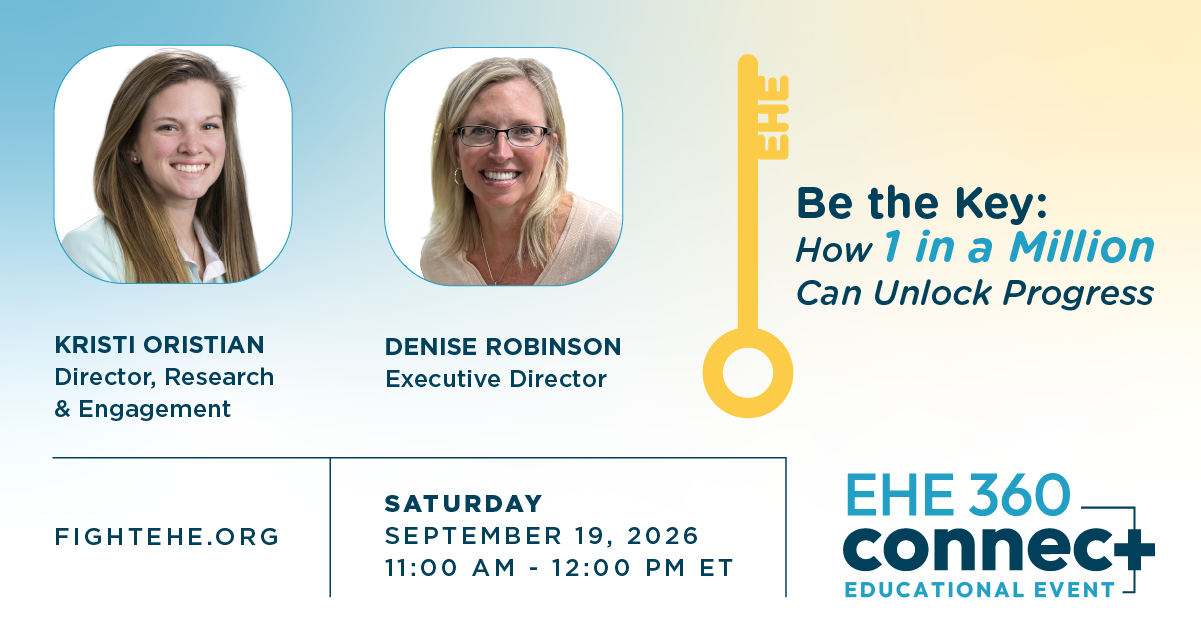

EMPOWER YOURSELF WITH KNOWLEDGE
Upcoming Foundation Events
Quick Links
Patients
Community
Latest EHE News, Events and Research

An important message from Jenni Kovach, President, The EHE Foundation Board of Directors
I am writing today to share an organizational change to The EHE Foundation. After four years as a part-time contractor, Medha Deoras-Sutliff has ended her engagement with the foundation to pursue other opportunities. Medha will continue to provide her services to the foundation until the end of November to ensure a smooth transition. Medha came […]

Congrats to Kim Young for Finishing the Maine Marathon on October 2, 2022.
Kim Young was diagnosed with EHE in March 2021, and Oct 2nd, 2022 was the second time she ran the Maine Marathon in support of The EHE Foundation. She is a champion for creating awareness for EHE, and we are grateful for her support. Kim teamed up with the Maine Marathon to allow the EHE […]
ESMO 2022 Congress
EHE champions were on the global stage on September 9th, at the ESMO2022 Congress in Paris, France. ESMO, the European Society of Medical Oncology, is a leading professional organization for medical oncology education and information. Dr. Silvia Stacchiotti, a leading EHE clinical expert (Italy), and Hugh Leonard, Chair of Trustees of the EHE Rare Cancer […]
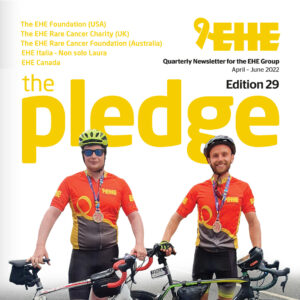
The Pledge: Edition 29, Q2 – April -June, 2022
Together, the US, UK, and Australia EHE foundations team up to strengthen the force against EHE. This group provides a quarterly update, which is led by the UK and includes research news, patient and fundraising stories, and much more! Click here to view the most recent edition of our online EHE newsletter, The Pledge.
2022 EHE Research Grant Cycle Update
A pillar of The EHE Foundation’s mission is to seek treatments and a cure for EHE by pursuing scientific research, and one way we do this is by funding the most impactful EHE research projects possible. To support our mission, the Foundation issues a call for research grant proposals each year from the global scientific […]
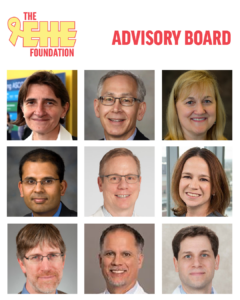
The EHE Foundation Advisory Board Annual Meeting
The EHE Foundation’s Advisory (Ad) Board met with the Foundation’s research team in June for their annual meeting. The Ad Board is composed of nine renowned clinicians and researchers who generously give their time and talents to advise The Foundation, in addition to the countless hours they spend during their ‘day jobs’ with patients, research […]

Inside 2026 YAP/TAZ and TEAD: At the Crossroads of Cancer, and Why It Matters for EHE
This summer, EHE Foundation Executive Director, Denise Robinson, traveled to Telluride, Colorado, for YAP/TAZ and TEAD: At the Crossroads of Cancer, an annual scientific workshop dedicated to one of the most promising areas of EHE research today. It was the first time the EHE Foundation had a seat at this particular table, bringing the patient’s […]
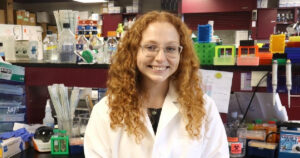
Meet the 2026 Recipient of the EHE Foundation’s Fellowship Travel Grant: Sarah McMullan
Sarah McMullan is a PhD candidate studying epithelioid hemangioendothelioma (EHE) in Dr. John Lamar’s laboratory, in the Department of Molecular and Cellular Physiology at Albany Medical College. This summer, the EHE Foundation awarded her a Fellowship Travel Grant for the second year in a row, allowing her to return to YAP/TAZ and TEAD: At the […]

Retrospective study from Charité–Universitätsmedizin Berlin, Germany
A new retrospective study from Charité–Universitätsmedizin Berlin describes 41 people with EHE treated at the center between 1997 and 2022, offering a single-center picture of EHE presentation and outcomes. It was published in the Journal of Cancer Research and Clinical Oncology in July 2026. In this report, women made up the majority of cases (61%), […]