We envision a world where Epithelioid Hemangioendothelioma (EHE) is easily diagnosed and treatable. Join our dedicated community by subscribing to our emails.

EMPOWER YOURSELF WITH KNOWLEDGE
Upcoming Foundation Events
Quick Links
Patients
Community
Latest EHE News, Events and Research
Retrospective study from Charité–Universitätsmedizin Berlin, Germany
A new retrospective study from Charité–Universitätsmedizin Berlin describes 41 people with EHE treated at the center between 1997 and 2022, offering a single-center picture of EHE presentation and outcomes. It was published in the Journal of Cancer Research and Clinical Oncology in July 2026. In this report, women made up the majority of cases (61%), […]
Be the Key – How one in a million can unlock progress!
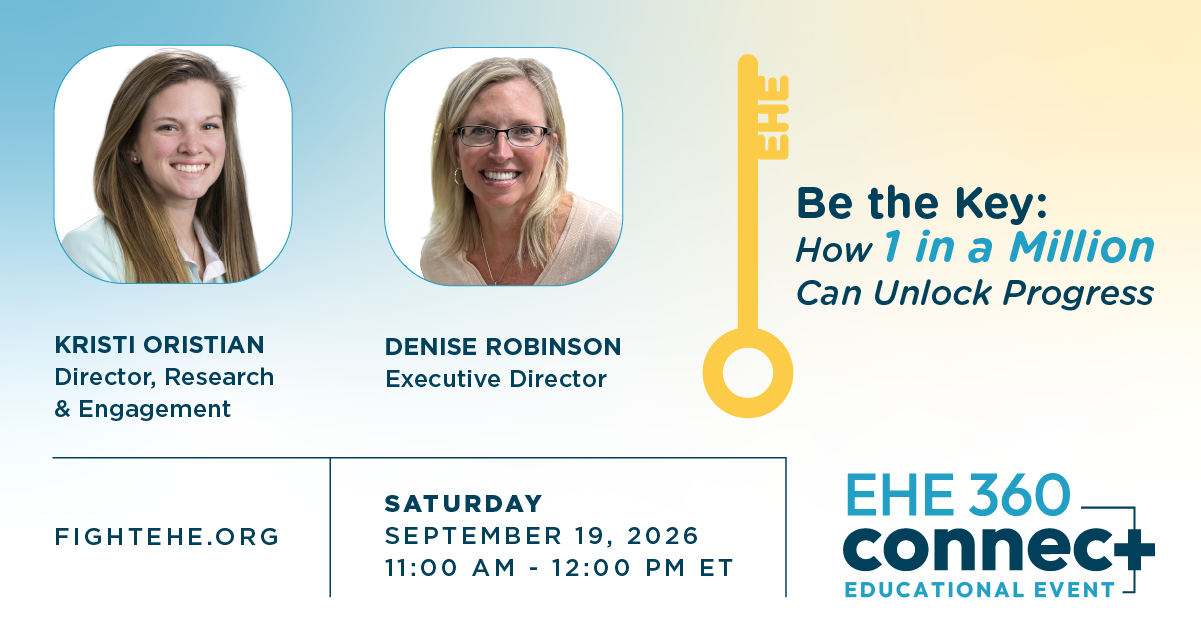
Join Denise Robinson, Executive Director, and Kristi Oristian, Director of Research, for an interactive community conversation about why individual patient experiences are a critical need and an important component in unlocking progress for everyone affected by EHE. If you have EHE, you are one in a million, and you hold a key that can lead […]
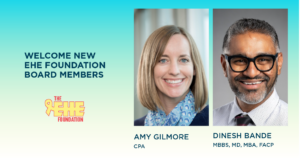
EHE Foundation Welcomes Two New Board Members
We are pleased to welcome two new members to our Board of Directors: Amy Gilmore, CPA, and Dinesh Bande, MBBS, MD, MBA, FACP. Both bring extensive experience, leadership, and passion to our mission. As the leading global non-profit dedicated to finding effective treatments and a cure for EHE, we are grateful that they are lending […]
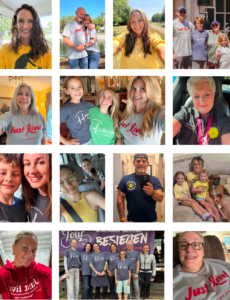
EHE Community Celebrates Sarcoma Awareness Month
Building awareness. Finding community. Many thanks to everyone who joined in for Sarcoma Awareness Month this July! By sharing photos and content, you helped raise awareness of sarcomas, like EHE. Wear Yellow Wednesday, EHE T-Shirt Tuesday, and Sunflower Sunday were just a few of the ways our community showed up and spread the word about […]
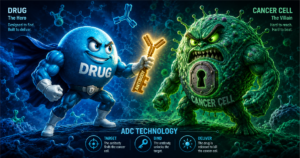
ADCs–Unlocking Future Treatment Advances for EHE
Why this matters for people with EHE For people living with EHE, finding an effective treatment and understanding who best benefits from treatments is one of the greatest challenges of this disease. Traditional chemotherapy is often ineffective for EHE, and the search for more effective treatment options is central to our mission at the EHE […]
A Powerful Community Gathering at the 2026 EHE 360 Global Conference
The EHE Foundation hosted the sixth annual virtual convening of the EHE 360 Global Conference on April 31 – May 1, 2026. The conference brought together patients, caregivers, clinicians, researchers, regulators, and industry partners from around the world to promote education, broaden research collaborations, and advance therapeutic development for epithelioid hemangioendothelioma (EHE), an ultra-rare sarcoma. […]
Across Borders and Histologies: Rethinking Endpoints for Vascular Sarcoma Trials
Following the publication of results from a phase 2 study of eribulin in two vascular sarcomas, angiosarcoma and EHE, Dr. Tom Chen of National Taiwan University College of Medicine shared commentary in Clinical Cancer Research. He praised the investigators for their collaborative study while also pointing to important considerations for future research. Although angiosarcoma and […]
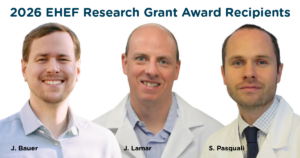
EHE Foundation Awards $335,000 in New Research Grants to Advance Progress in EHE
The EHE Foundation is proud to announce $335,000 in funding through the 2026 EHE Foundation Research Grants Program to support two innovative research projects in epithelioid hemangioendothelioma (EHE). Selected for their scientific merit, potential impact, and clinical relevance, these projects address two important priorities in EHE research: biomarker development and new therapeutic approaches. Together, they […]
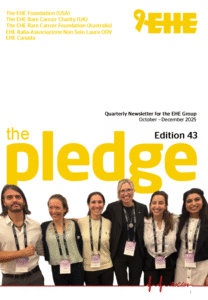
The Pledge: Edition 43, Q4 – October-December, 2025
Publication of The Pledge quarterly newsletter is led by the EHE Rare Cancer Charity (UK). EHE patient advocacy groups from around the globe provide content, including research news, patient and fundraising stories, and much more. Click here to view the most recent edition of the online EHE newsletter, The Pledge.