The EHE Foundation had the privilege of attending the CTOS 2025 Annual Meeting, held November 12-15, in Boca Raton, Florida. The Connective Tissue Oncology Society (CTOS) is a global, professional medical organization of clinician-scientists, translational researchers, and patient advocates united by a single goal: advancing treatment of sarcomas.
For the EHE community, this annual gathering is one of the most important opportunities to elevate our voice on the global research stage. As professional advocates, the Foundation makes a point to be actively engaged–connecting with drug developers, researchers, clinician-scientists, and the world’s leading experts in EHE. This is advocacy in action: creating opportunities for collaboration, generating new ideas, and driving the momentum needed to accelerate progress for people living with this ultra-rare sarcoma.
Highlights From the Week
Ultra-rare Sarcoma Working Group (URSWG)
The Ultra-rare Sarcoma Working Group (URSWG) meeting featured progress on the PUSH Platform, a consortium of the global sarcoma community focused on collecting and using all available evidence to accelerate the development of new treatments for people with ultra-rare sarcomas. The consortium has several sarcoma-subtype working groups; the EHE Working Group is an active group of clinicians from several countries working to improve understanding of the disease, integrate data from all known sources, and advance translational and clinical research to accelerate treatment development.

SARC Semi-annual Meeting & SARC046
The Sarcoma Alliance for Research through Collaboration (SARC) convened its semi-annual meeting, featuring the new EHE study, SARC046: A Phase II Trial of Nab-Sirolimus in Patients With Progressing or Symptomatic Epithelioid Hemangioendothelioma, planned to open in early 2026.
This new clinical trial, led by Dr. Michael Wagner at Dana-Farber Cancer Institute, will be open at several locations across the United States. Stay tuned for more information in early 2026.
Poster Reception at CTOS
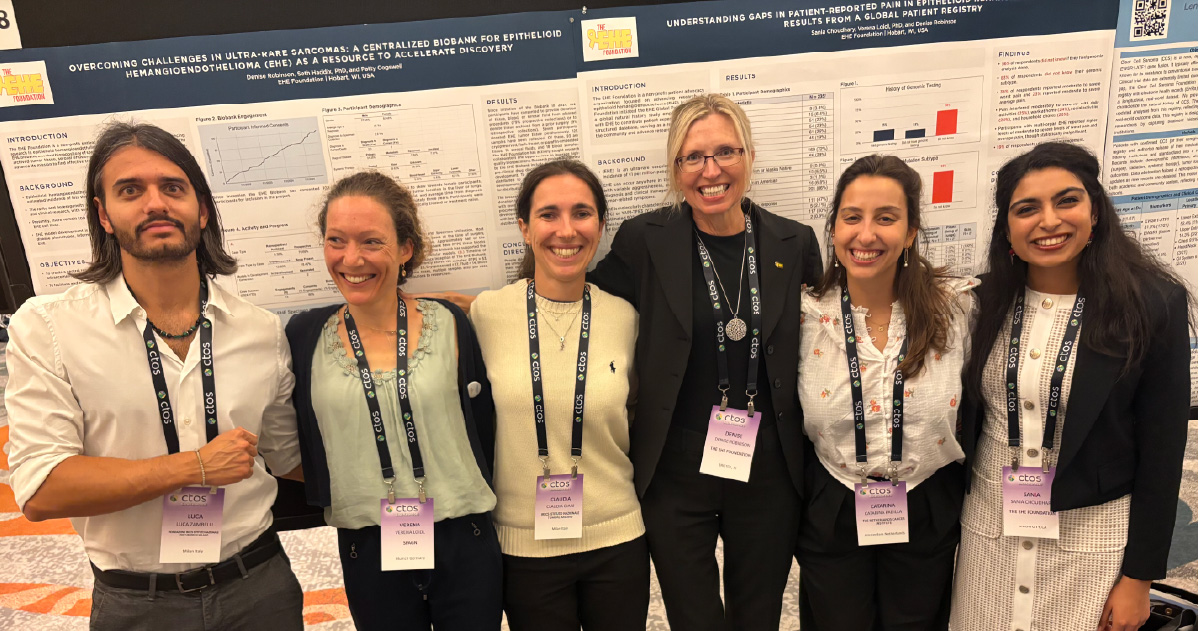
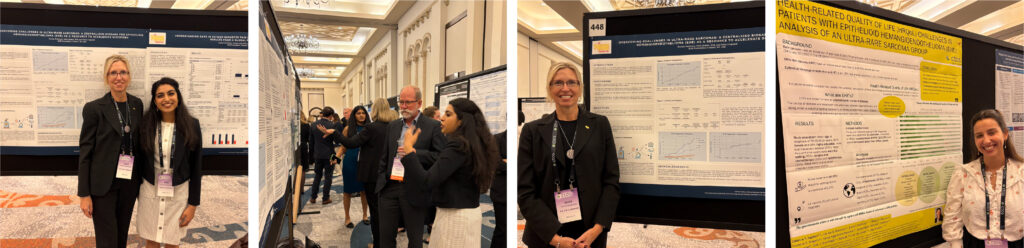
EHE was well represented at the CTOS Poster Reception. Teams from multiple countries presented new data that broaden our understanding of EHE and point toward better ways to treat this complex disease. We extend our sincere thanks to all the authors and collaborators whose work strengthens hope for patients and families.
- Overcoming Challenges in Ultra-Rare Sarcomas: a Centralized Biobank for Epithelioid Hemangioendothelioma as a Resource to Accelerate Discovery
- Understanding Gaps in Knowledge and Patient-Reported Pain in Epithelioid Hemangioendothelioma: Results from a Global Patient Registry
- GDF-15 As A Prognostic Factor in Patients with Epithelioid Hemangioendothelioma
- Health-Related Quality of Life (HRQOL) Challenges in Patients with Epithelioid Hemangioendothelioma (EHE): Analysis of an Ultra-rare Sarcoma Group
- Pain Assess Criteria (PAC) Anticipate RECIST Progression and Correlate with Blood Levels of Growth Differentiation Factor 15 (GDF15) in Epithelioid Hemangioendothelioma (EHE)
- Determinants of Diagnostic Interval in Epithelioid Hemangioendothelioma: a Linear and Quantile Regression Analysis of Patient-Reported Data From the SPAGN Global Sarcoma Diagnosis Pathway Survey
- First-Line Pazopanib in Patients with Epithelioid Hemangioendothelioma: A Retrospective Single-Center Analysis
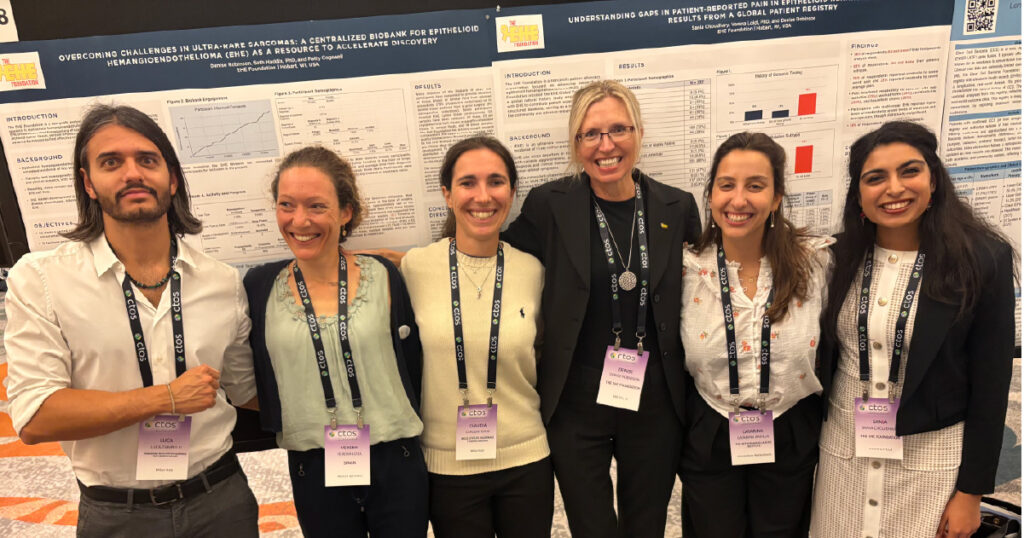
Several of the EHE poster presenters: (left to right) Luca Zambelli, MD (Istituto Nazionale Tumori), Verena Loidl, PhD (SPAGN), Claudia Giani, MD (Istituto Nazionale Tumori), Denise Robinson, Catarina Padilla, MSc (Netherlands Cancer Institute), Sania Choudhary (EHE Foundation)
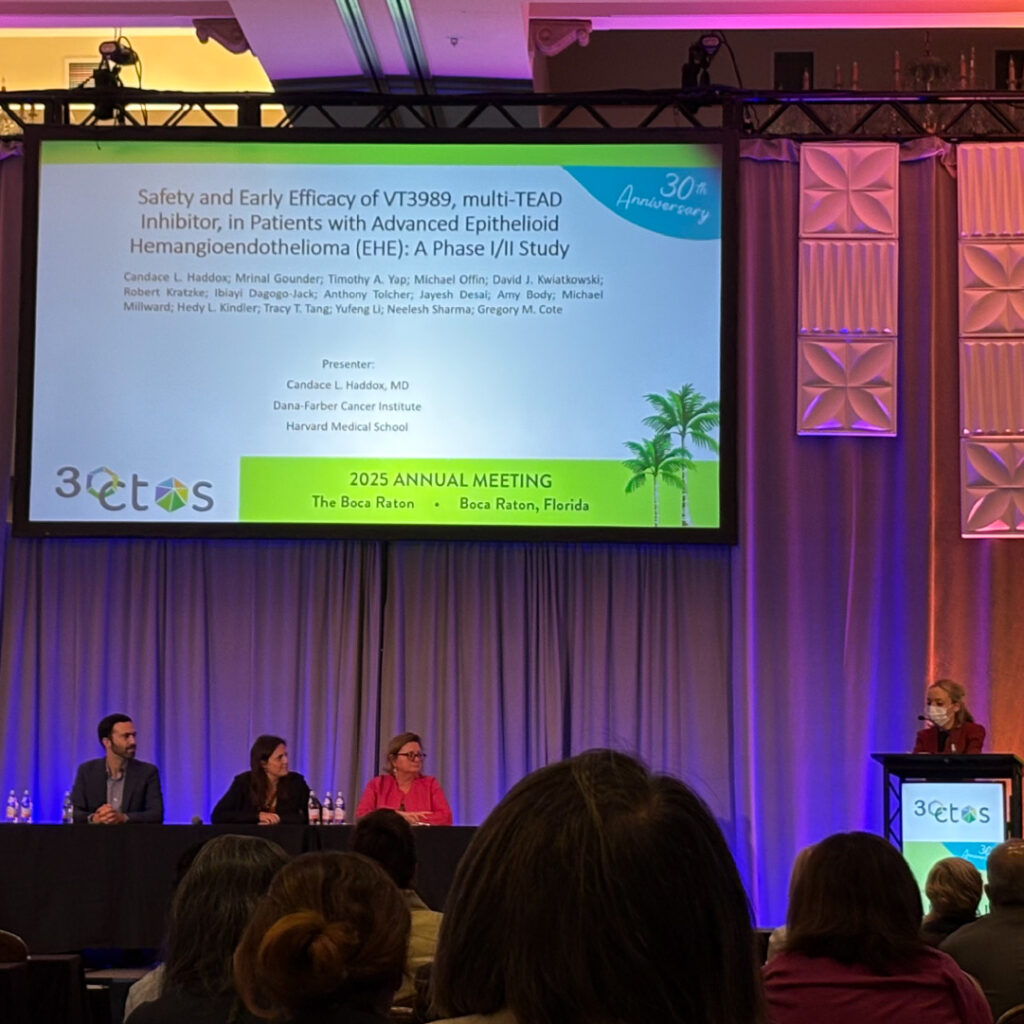
VT3989 Study Data Presented
Dr. Candace Haddox, Dana-Farber Cancer Institute, presented safety and early efficacy data of VT3989, a multi-TEAD Inhibitor, in patients with advanced EHE. VT3989 is currently being investigated in a Phase I/II multi-center trial. Dr. Haddox reported on 14 patients enrolled, concluding that VT3989 has a favorable safety profile, meaning generally, the drug has been shown to be safe and well tolerated, with limited side effects. The data demonstrate compelling efficacy in EHE and support further investigation.
The EHE Foundation will continue working closely with Vivace to advocate for the continuation of studies. We remain grateful to the patients who participate and the physicians and study teams whose expertise drives this research.
TEADES Phase I/II Study of ODM-212 Preliminary Results in EHE
Orion Corporation presented preliminary data from its TEADES Study, an early-phase investigation of its novel oral pan-TEAD Inhibitor, ODM-212. Early data demonstrate durable tumor regression with TEAD inhibition by ODM-212. This study is ongoing, with new study centers anticipated. Please stay alert for more information regarding this clinical trial.
Radiologic Response in EHE: Beyond RECIST?
Dr. Andrea Vanzulli, Fondazione IRCCS Istituto Nazionale dei Tumori, Milan, presented an overview and results of the utilization of RESCORe (Response Evaluation by Serosal Changes and Outcomes Reporting Criteria) to assess tumor response to treatment in patients with aggressive EHE who have EHE-related serosal involvement. Study data showed that this newly defined assessment tool could serve as an extension of RECIST (the current standard criteria for tumor response assessment) for patients with aggressive EHE. Ongoing research will yield additional data, with further studies anticipated.