Care Planning
Shared Decision-Making in an Ultra-rare Sarcoma
You Are the Most Important Member of Your Care Team
You, or the person you care for, will be at every appointment, every scan, every new symptom, and every conversation about what comes next. That continuity makes you its most important member, and it makes your observations, priorities, and questions information your care team needs. As the person experiencing this disease, your role is to advocate for a care plan that aligns with your personal goals and values.
Learning about EHE and advocating for yourself empowers you to make informed decisions about your care. Your care team, your support network, and the EHE Foundation are all part of this journey of education and care planning.
If you care for and support someone with EHE, you play an invaluable role. Visit our Caregiving page for resources built specifically for you.
Build Your Care Team
Because EHE is so rare, a specialized and experienced clinical team is especially important. The Experts’ Consensus Paper on EHE emphasizes that people with EHE should be managed at sarcoma reference centers or sarcoma networks by a multidisciplinary team experienced in treating sarcomas.
If you cannot access expert sarcoma care, ask your oncologist to consult directly with a sarcoma reference center about your case. Many centers offer case reviews and second opinions to support patients seen outside their institution.
Our Provider Directory lists clinicians with EHE experience.
“For a rare cancer, like EHE, where we don’t have a lot of data, we rely on shared decision-making, where we bring the patient and their loved ones in to help make the decision about what’s next. And you may say, “I’m just an accountant - what do I know about EHE?” But we really need your input about what’s important to you.
Gregory Cote, MD, PhDMass General Brigham Cancer Institute
Take an Active Role: Shared Decision-Making
EHE is a highly variable disease with no standard treatment guidelines and limited data on which treatments work best for different presentations. The disease can behave differently from person to person. This means treatment for EHE is highly individualized.
Shared decision-making is a partnership between patients, caregivers, and the care team: your doctors bring clinical evidence and expertise, and you bring your goals, values, and the realities of your daily life. Together, you weigh the options and choose the care plan that best suits you.
In practice, your role is to:
- Learn the options. Ask about benefits, risks, and alternatives for any treatment or care plan, including active surveillance. Visit Treating & Managing EHE to understand treatment options.
- Name what matters to you. How a treatment affects your energy, your ability to work or care for your family, and your long-term quality of life is information your clinicians need in order to guide the plan. Confidently communicate these needs and concerns.
- Speak up about how you feel. Bring your questions and concerns to every appointment, including the ones that feel small. Be sure to discuss how your body feels, including any new or worsening pain or other symptoms. Talk about your mental health, nutritional, and physical needs, and ask for support services in your care plan when you are struggling.
EHE Care Plan & Toolkit
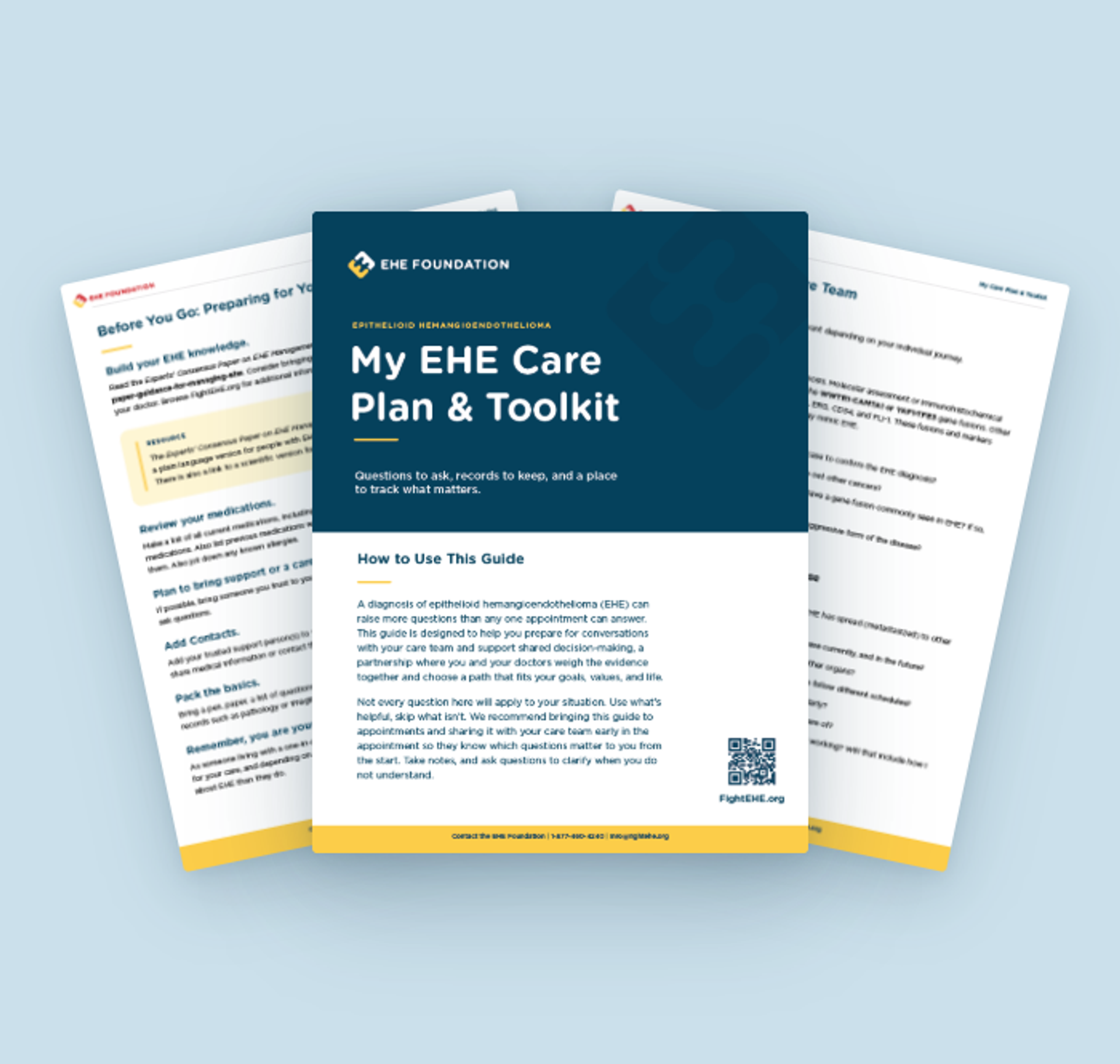
Shared decision-making works best when you walk into every appointment prepared. This guide gives you questions to ask your care team, plus practical tools to track appointments, symptoms, scans and imaging, and medications, all in one place.
Bring it to every visit, and use it to make informed care decisions with your team.
Build EHE Knowledge
Living with EHE, or caring for someone diagnosed, requires continual learning about topics you never thought you would need to know. Education is core to our mission and essential to improving the lives of people with EHE. We provide medically reviewed information and host expert-led webinars on the latest treatments and research created to empower you with the information you need to make informed decisions.
About EHE
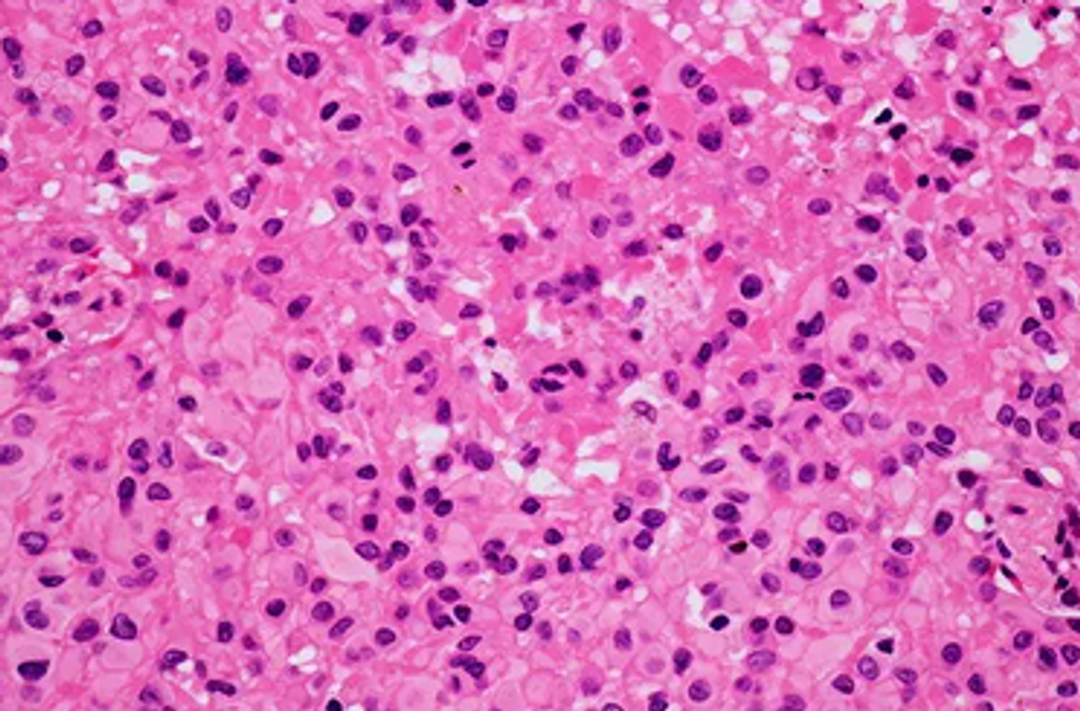
A hub of information about EHE and how it is monitored, treated, and managed.
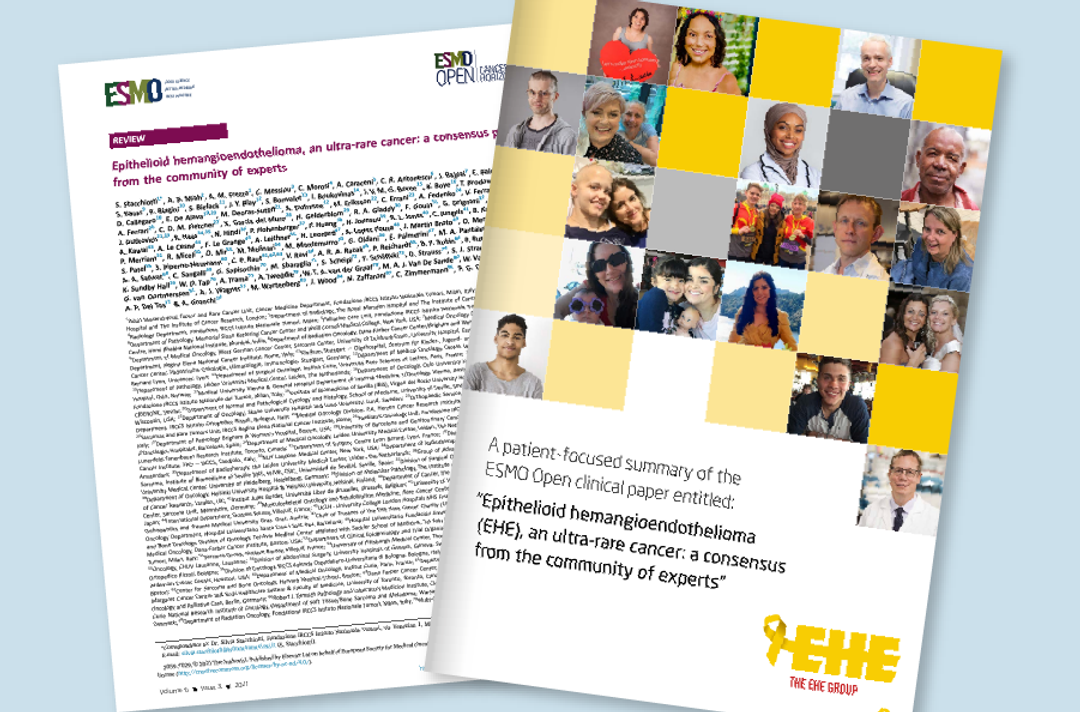
Experts’ Consensus Paper on EHE
Clinical guidance on treating and managing EHE written by global EHE experts.

Video Library
Recordings of expert-led webinars on the latest EHE clinical care and research.

Publications Library
For those wanting a deeper dive, browse a collection of published research, case studies, and related literature.
“Celebrate your knowledge. It is okay in your journey to realize you know more about this disease than many providers out there.
Shree Venkat, MDMoffitt Cancer Center
Every story, every dollar, every voice brings a cure closer.
Find inspiration in all the ways you can help advance EHE research, education, and advocacy.