EHE in Children & AYA
Epithelioid Hemangioendothelioma (EHE) in Children, Adolescents, and Young Adults (AYA)
Epithelioid hemangioendothelioma (EHE) can occur at any age, including in children, teens, and young adults. Based on current evidence, there are no known differences in how EHE behaves in children and younger adults versus older people. EHE is exceedingly rare in children and not very common in adolescents and young adults (AYAs). When EHE does occur in younger people, tumors may be more likely to appear in bones and soft tissue, although the disease can occur in any body part or organ, just as with adults affected by EHE.
EHE 101 covers the fundamentals of EHE, including what it is, how EHE is diagnosed, and what affects a person’s prognosis. The core principles of management in children and young adults are the same as in adults, with some important considerations for younger people.
Managing EHE in Young People
Like anyone diagnosed with EHE, children and young people require expert sarcoma care with a focus on pediatrics and young adults due to the potential long-term effects of the disease and treatment on the growing body. The core approach to treating and managing EHE applies across all ages. What changes is the context in which those decisions are made.

Long-term Effects of Treatment
Children and adolescents are still growing. Treatment decisions must weigh disease control against the potential long-term impact of surgery, radiation, or systemic therapy on the developing body. Doctors who specialize in pediatric, adolescent, and young adult care, and in the treatment of sarcomas, should be involved.
Fertility and Reproductive Health
For adolescents and young adults, fertility preservation should be discussed before systemic treatment. We encourage people to raise this question directly with their care team.
Growth and Development
Radiation therapy near growth plates or developing structures has been shown to carry specific risks in children, which may factor into treatment decisions.
Psychosocial and Quality-of-Life Considerations
A cancer diagnosis during childhood, adolescence, or young adulthood intersects with school, identity, relationships, and independence in ways that are distinct from adult experience. Psychosocial support for both the young person and their family is an important part of comprehensive care.
Multidisciplinary Team
Care for younger people with EHE should involve a team that includes pediatric oncology and ideally specialists with experience in sarcoma or rare vascular tumors.
Finding Expert Care
Because EHE is rare at any age, and rarer still in younger people, expert medical care is essential. Use our Provider Directory to find sarcoma specialists and centers with experience in EHE.
Experts’ Consensus on EHE
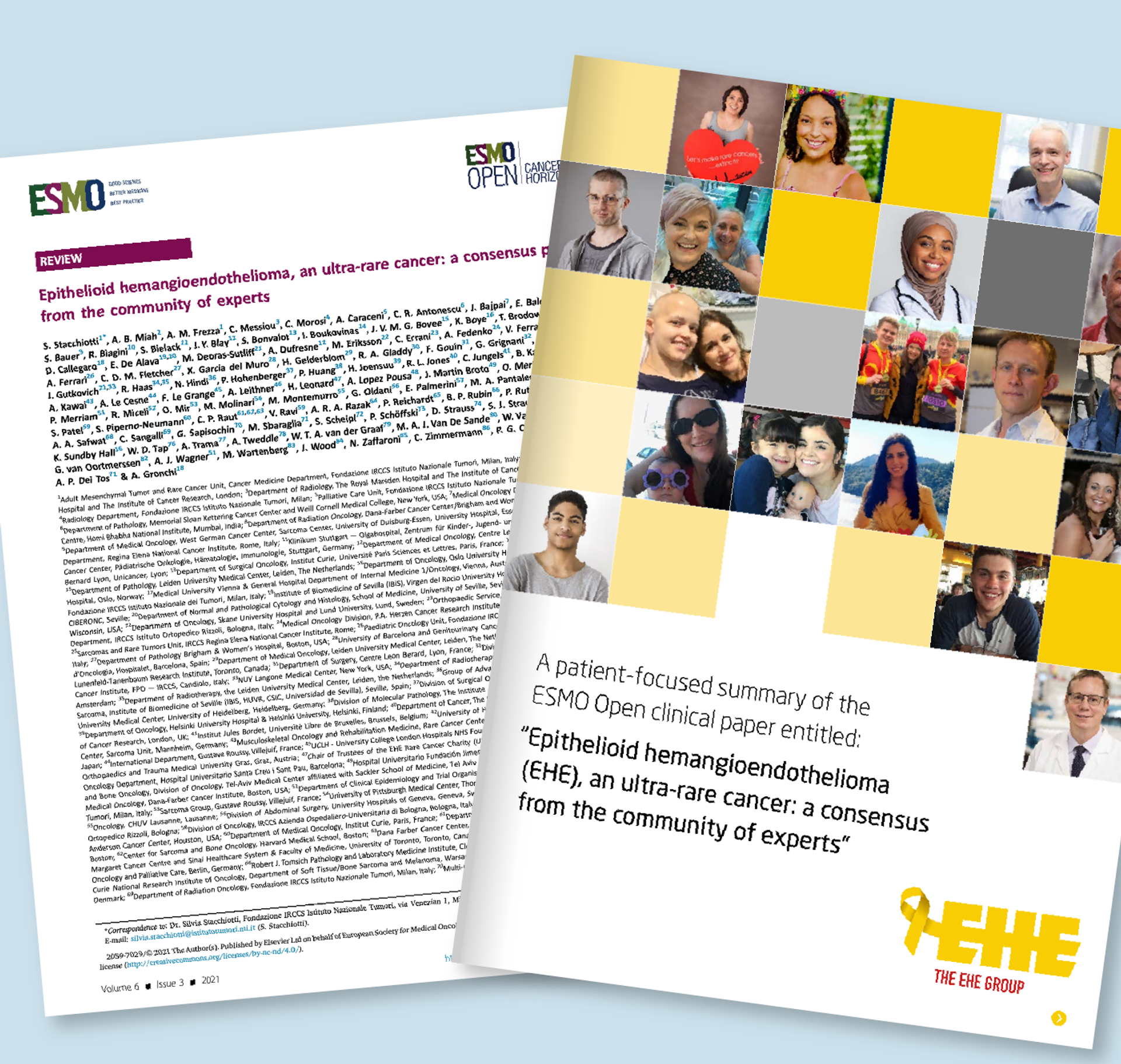
An international group of experts outlines disease biology, pathology, clinical presentation, and general principles of EHE management in the Experts’ Consensus Paper on EHE Management. Written to guide clinicians caring for people with EHE, the paper reflects current evidence and shared clinical experience across global EHE centers.
A patient-friendly version was developed to help people diagnosed with EHE understand the principles that shape care decisions. This foundational resource is a must-read for anyone affected by EHE and supports informed care planning and shared decision-making.
Relevant Publications
Clinical characterization and long-term outcomes in pediatric epithelioid hemangioendothelioma
Epithelioid hemangioendothelioma in children: The European Pediatric Soft Tissue Sarcoma Study Group experience
A retrospective review of the use of sirolimus for pediatric patients with epithelioid hemangioendothelioma
National Cancer Institute's Guide on Childhood Vascular Tumors
Next Steps


External Resources
The SAMFund
Provides grants to eligible young-adult survivors to help with expenses such as medical bills, insurance, rent or mortgage, continuing education, and mental-health costs.
Team Maggie for a Cure
Provides financial support for fertility preservation for young people facing cancer treatment.
Elephants & Tea
The only magazine written for and by the AYA cancer community, telling their story in their own words.
Stupid Cancer
The leader in building the adolescent and young adult (AYA) cancer community, ending isolation, and making cancer suck less.
General Resources
Find resources for people diagnosed with cancers and sarcomas.
Approaches to EHE Care
EHE care is highly individualized. Learn how specialists approach monitoring, treatment, and supportive care based on disease behavior, symptoms, and individual needs.