Published on: November 24, 2026
Categorized as: Advocacy
A Global Community United to Advance EHE Research: Recap of the CTOS 2026 Annual Meeting
The EHE Foundation had the honor of attending the CTOS 2026 Annual Meeting in Seoul, South Korea.
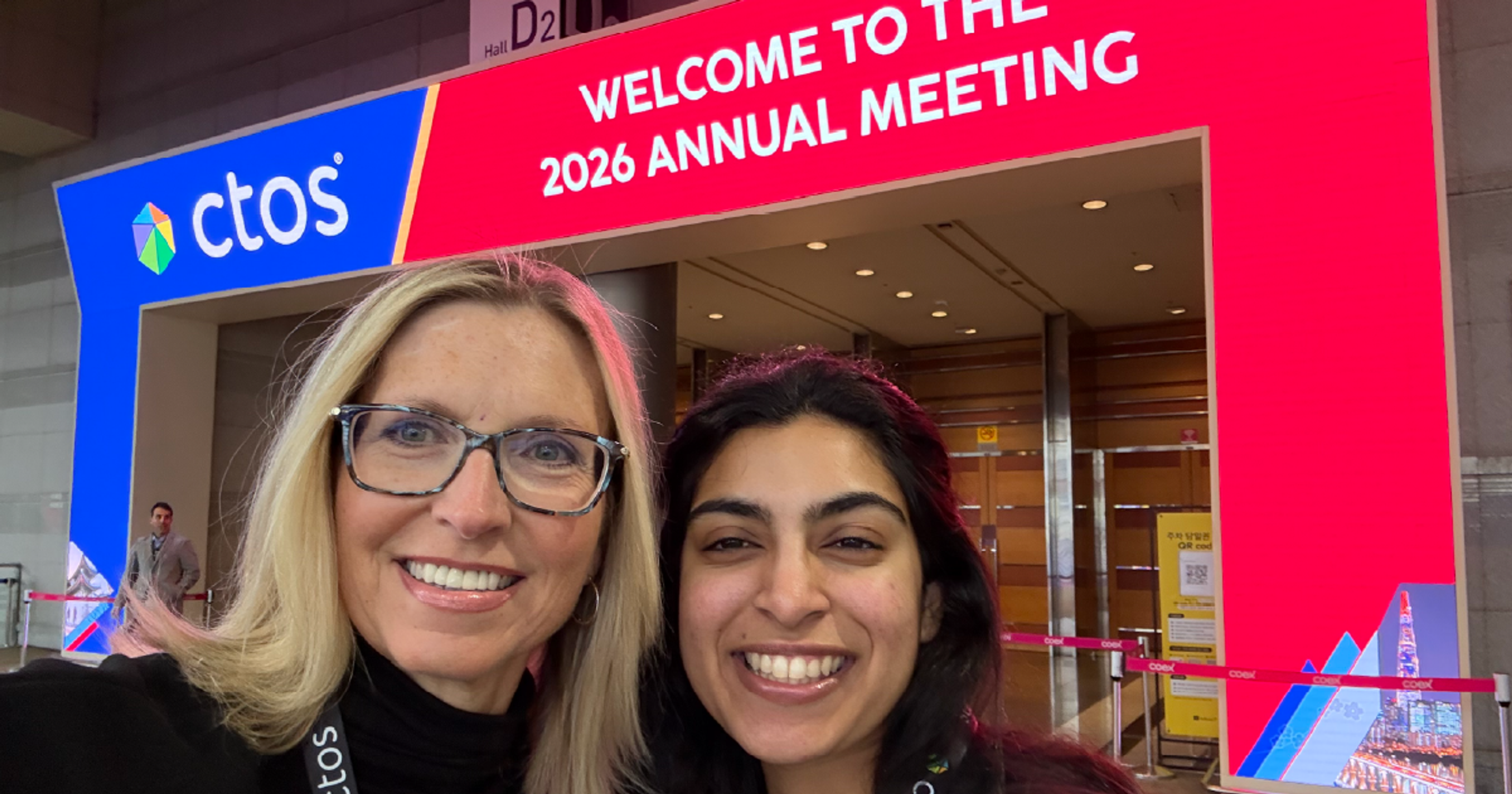
Denise Robinson, Executive Director, and Sania Choudhary, Junior Research Fellow, had the privilege of representing the EHE Foundation at the CTOS 2026 Annual Meeting in Seoul, South Korea. The Connective Tissue Oncology Society (CTOS) is a global, professional medical organization of clinician-scientists, translational researchers, and patient advocates united by one goal: to advance treatments for sarcomas.
This meeting is arguably the most important annual gathering of sarcoma clinicians and scientists, along with advocates and drug developers, to discuss clinical care and research. As patients’ representatives, this meeting is a forum to share new data, discuss ideas, and reveal opportunities - bringing the community together to unlock answers that can improve lives. Scientific presentations largely focus on drug development from lab bench to bedside, but that’s only part of what patients need. Addressing quality of life and the psycho-social burden of rare and ultra-rare cancers is hugely important, and is often a hidden and understudied aspect of cancer.
Thank you to supporters of the EHE Foundation who made it possible for us to attend this important meeting. Connection, community, collaboration. It happens with you, and because of you.
Highlights From the Week
Ultra-rare Sarcoma Working Group (URSWG)
CTOS brings together professionals across all sarcoma subtypes, and I am always excited that we begin with the Ultra-rare Sarcoma Working Group (URSWG) meeting. This working group is important because EHE is one of the rarest sarcomas. Clinical experts from around the world who manage EHE attend this meeting to share research and ideas and align on future goals.
I had the privilege to speak alongside Dr. Lorenzo D’Ambrosio, MD, PhD, a Medical Oncologist and researcher from the University of Turin. We presented the newly published EHE-tailored Pain Assessment Criteria (PAC-E) Framework, focusing on why pain assessment is important to patient care and research.
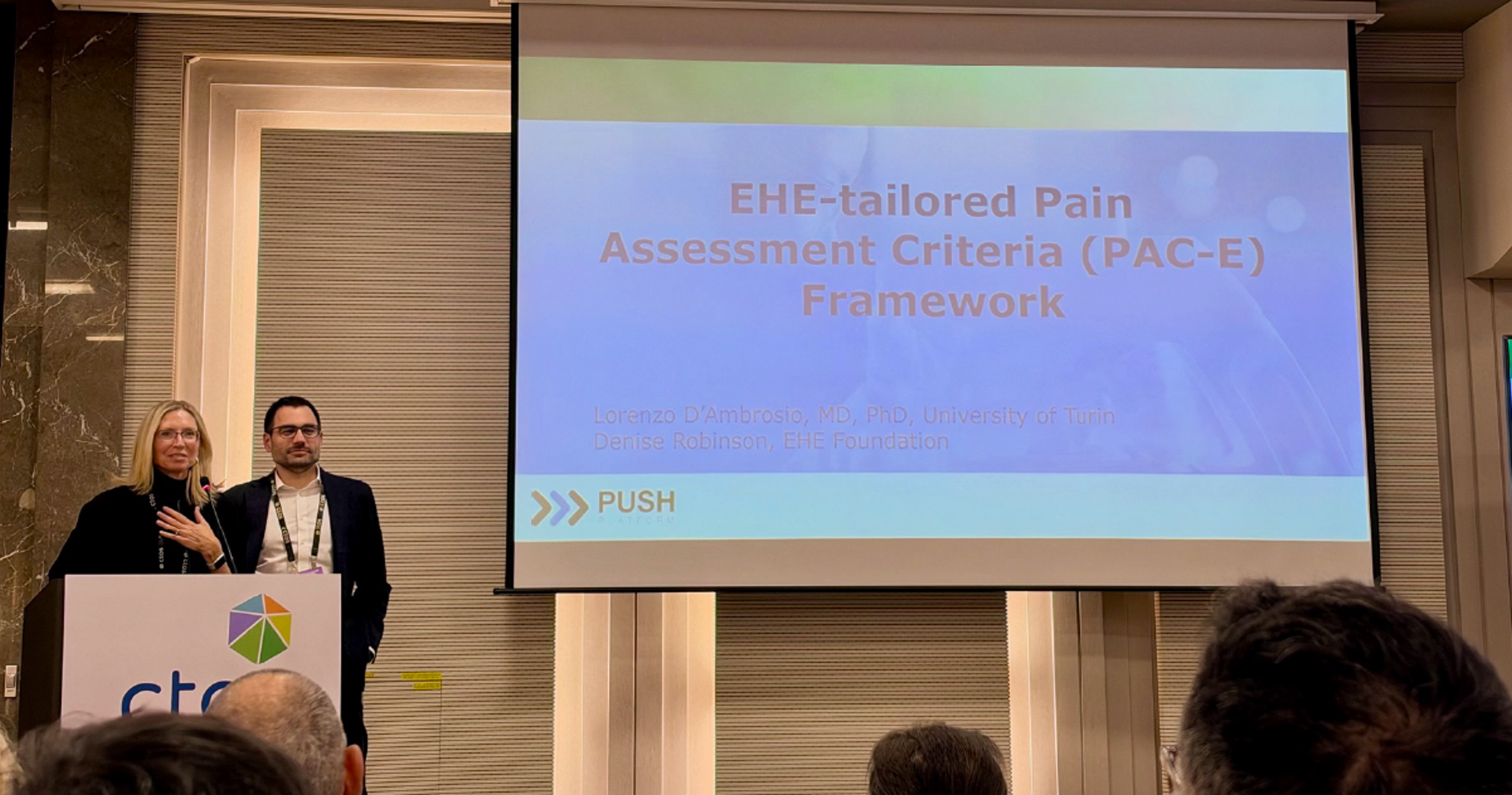
The URSWG agenda featured growing progress from the PUSH Consortium - a global community focused on collecting all available evidence to accelerate the development of new treatments for people with ultra-rare sarcomas. The PUSH EHE Working Group is laser-focused on the POEM Study, a prospective observational study that aims to study the natural history of EHE while generating important data on the efficacy of sirolimus for people with EHE.
Oral Presentation: Natural History of Advanced Epithelioid Hemangioendothelioma (EHE)
Dr. Silvia Stacchiotti, Fondazione IRCCS Istituto Nazionale dei Tumori, Milan, presented early findings from POEM, a Prospective international multicenter Observational study of Epithelioid heMangioendothelioma (NCT06680401).
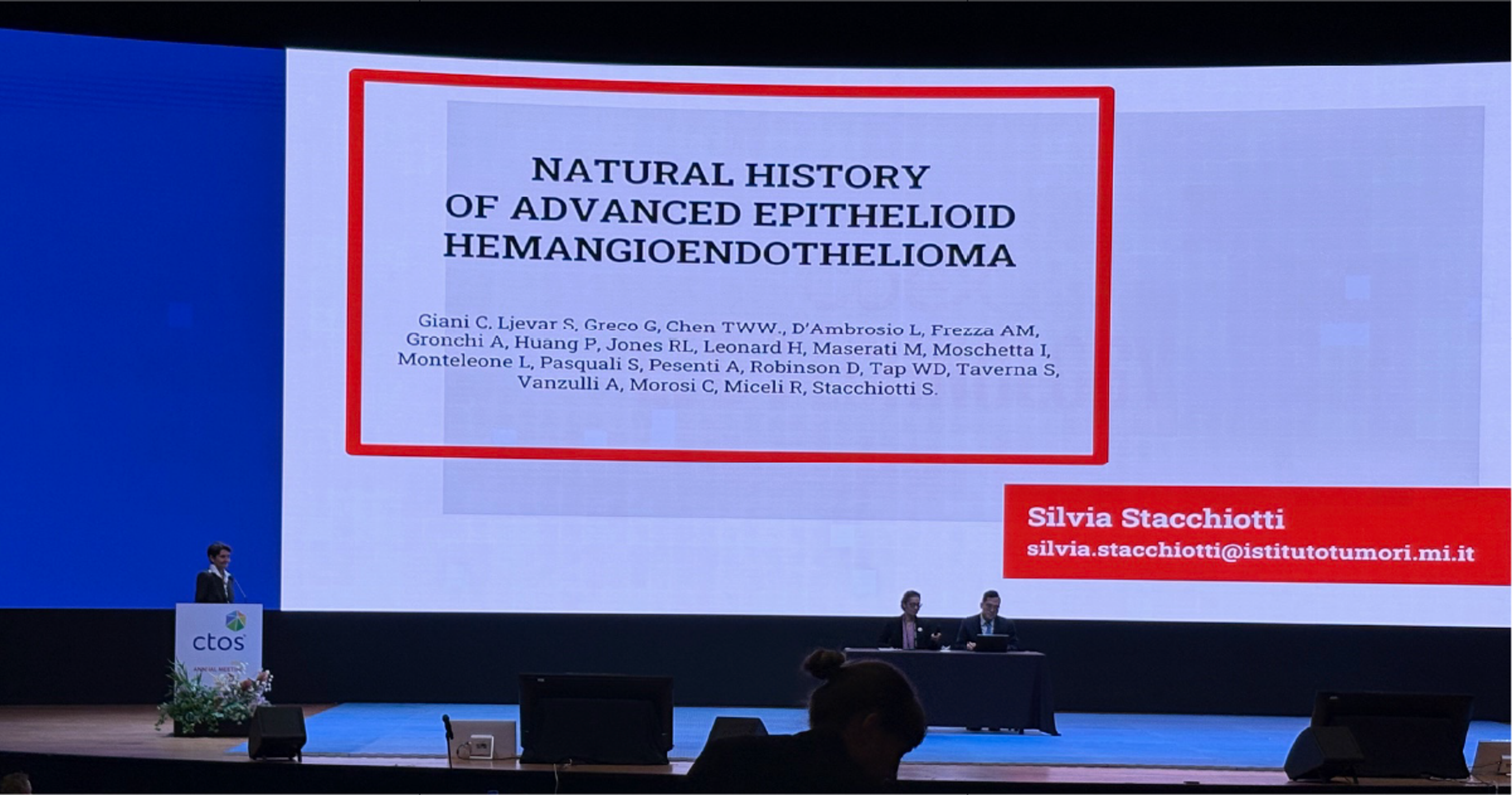
The presentation highlighted patients with advanced disease on active surveillance, with disease assessed using RECIST (the current standard criteria for tumor response assessment) and RESCORe (Response Evaluation by Serosal Changes and Outcomes Reporting Criteria). Pain and the presence of serosal effusions were also considered in the survival analysis.
Although the sample size is small, early results at a median follow-up of 2 years showed that approximately 60% of patients with advanced EHE remained progression-free during active surveillance, while approximately 40% had disease progression. These early findings require confirmation in a larger cohort and with longer follow-up; however, they may inform the development of prognostic tools to guide clinical decisions for active surveillance as an early disease management strategy.
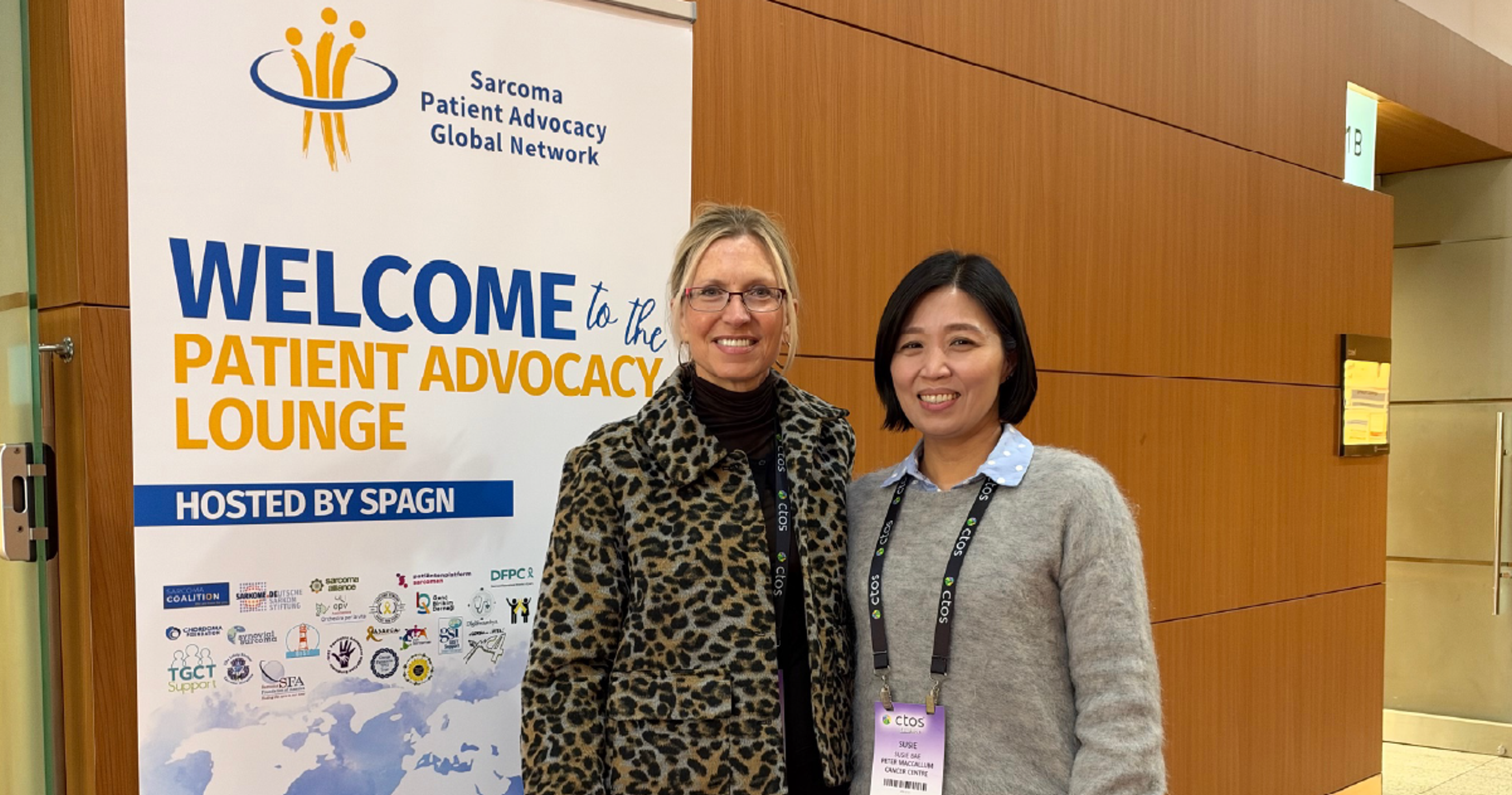
POEM is an active ongoing study in Italy, the United Kingdom, and Canada, with additional locations planned in Australia, Taiwan, and the United States. It was an honor to meet Dr. Susie Bae, Medical Oncologist at Peter MacCallum Cancer Center, who will be leading the study in Australia. The study is supported through grants from the EHE Rare Cancer Charity, EHE Foundation, and EHE Italia. We are grateful to the researchers and patients who have contributed to this study.
Poster Presentations
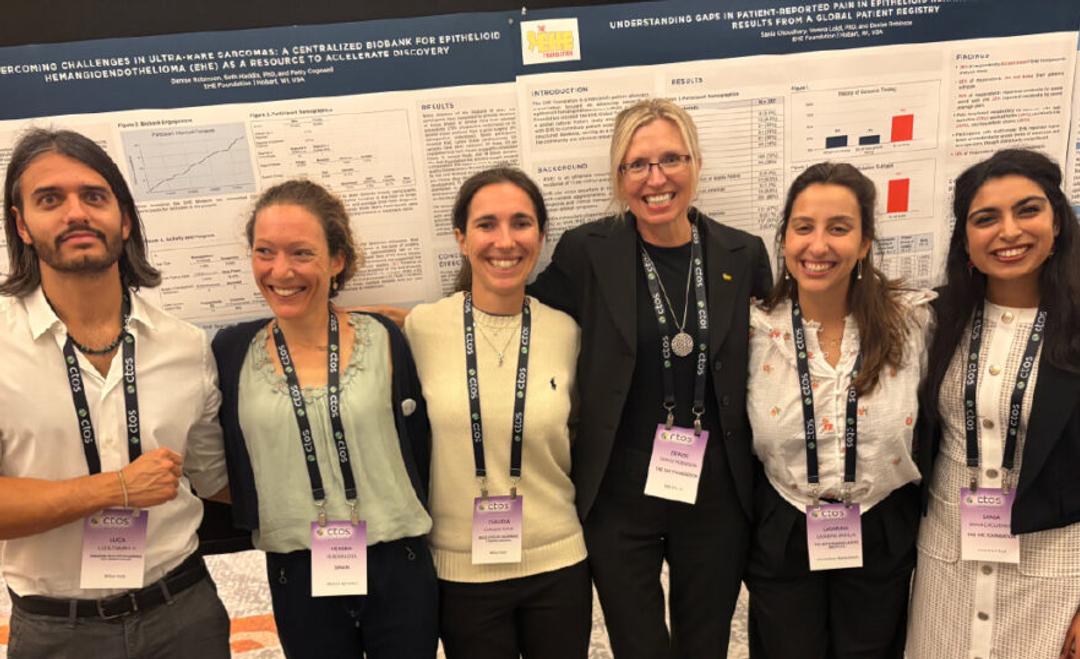
Over 650 posters were presented at CTOS, and we are proud that EHE was represented among the over 100 sarcoma subtypes. We extend our sincere thanks to all the authors and collaborators whose work strengthens hope for patients and families.
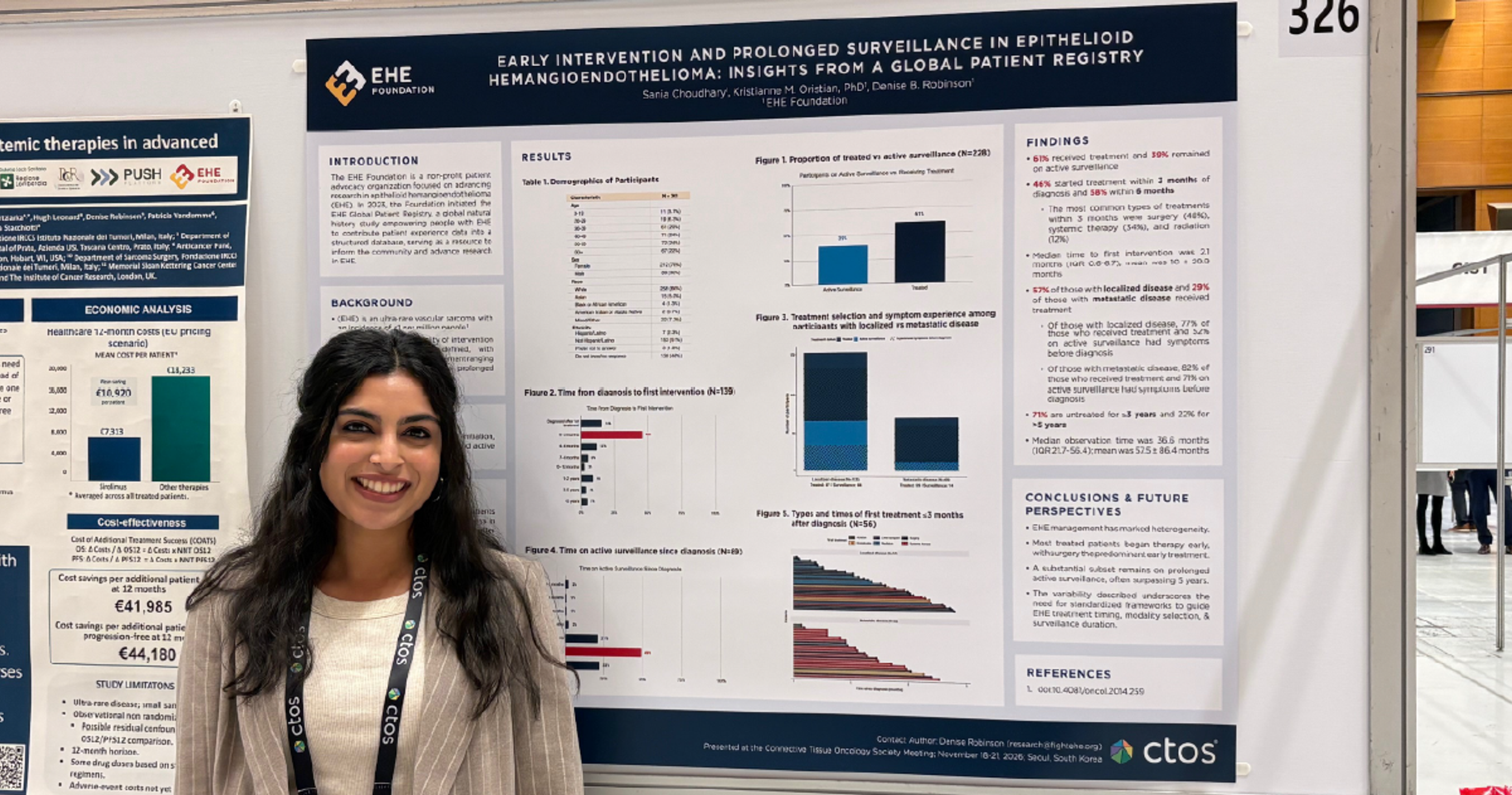
- (P 326) Early Intervention and Prolonged Surveillance in Epithelioid Hemangioendothelioma: Insights from a Global Patient Registry. Presented by Sania Choudhary, EHE Foundation. View PDF.
- (P 127) Circulating miRNA Signature for Risk Stratification of Epithelioid Hemangioendothelioma (EHE). Presented by Claudia Giani, MD, Fondazione IRCCS Istituto Nazionale dei Tumori, Milan, Italy.
- (P 327) Cost-Effectiveness of Sirolimus Versus Other Systemic Therapies in Advanced Epithelioid Hemangioendothelioma (EHE): a Preliminary Analysis Using 12-Month Clinical Outcomes. Presented by Rosalba Miceli, PhD, Fondazione IRCCS Istituto Nazionale dei Tumori, Milan, Italy.
- (P 450) First-in-Human Trial of the TEAD Inhibitor ODM-212 (TEADES) in Epithelioid Hemangioendothelioma (EHE). Presented by Antoine Italiano, MD, PhD, Institut Gustave Roussy, Villejuif, Île-de-France, France.
- (P 617) Hemangioendothelioma: Clinical Experience From a High-Volume Sarcoma Referral Center. Presented by Ariadna Acosta Sanchez and Julio Torres Sempere, Hospital Universitario Virgen del Rocío, SEVILLA, Andalucia, Spain.
New Data from TEADES: a Phase I/II Study of ODM-212
Dr. Antoine Italiano, Institut Gustave Roussy, Villejuif, Île-de-France, France, presented new data from Orion Pharma’s TEADES Study, an early-phase investigation of its novel oral pan-TEAD Inhibitor, ODM-212.
Early data include 43 patients enrolled in the study, treated with ODM-212. Key takeaways are:
- Efficacy of ODM-212 has been observed in patients with serosal involvement.
- Durable response, a positive treatment effect that has lasted over a sustained period of time, has been observed.
- The drug has been shown to be well tolerated, with no serious side effects.
The data are promising, and we are very encouraged by the continuing development of this novel therapy. View the full poster. Please follow along for future information regarding this clinical trial.
SARC Semi-annual Meeting
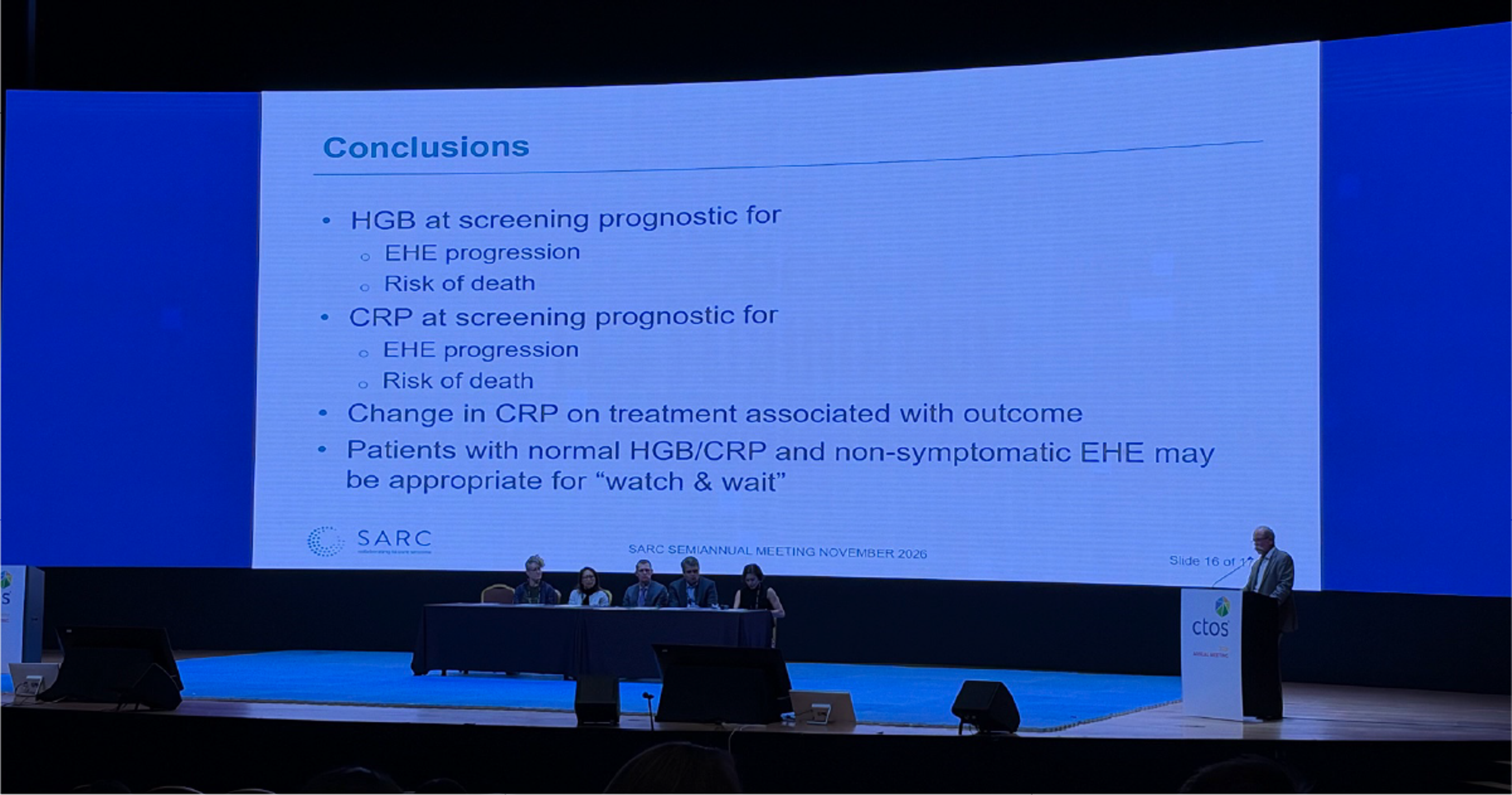
The Sarcoma Alliance for Research through Collaboration (SARC) held its semi-annual meeting, featuring correlative data from SARC033: a Phase 2 clinical trial evaluating the MEK inhibitor trametinib in patients with unresectable or metastatic EHE. The study reported its data in 2024; while it failed to meet its primary endpoint, it yielded significant insights. Dr. Scott Schuetze, MD, PhD, University of Michigan, led this important study and shared these data. We look forward to having Dr. Schuetze present these findings to the community in the near future. Stay tuned.